


How Do We Help?
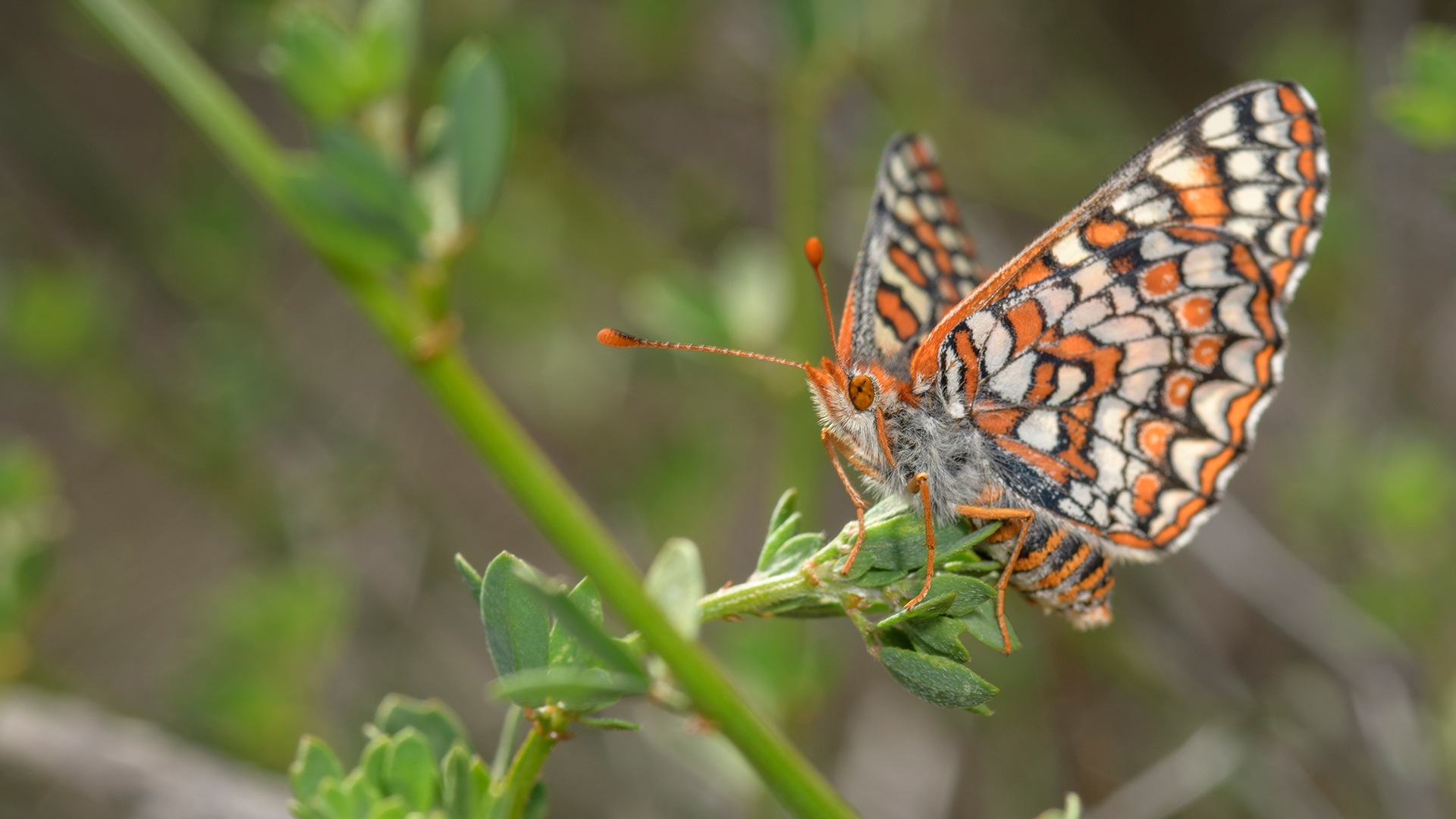
Since 2012, San Diego Zoo Wildlife Alliance has helped increase native populations of the Quino checkerspot butterfly. This is how we help!
1. We bring adult butterflies to the Zoo, where they lay thousands of tiny eggs that soon hatch into thousands of tiny larvae. The butterflies don’t stay with us very long, and we return them to where we found them.
2. After the eggs hatch, the larvae are offered plants to eat. As they get older and the weather gets warmer, they go from spiky to fuzzy and enter diapause. Diapause happens when insects stop growing because they don’t have enough resources. Quino checkerspot larvae enter diapause in summer, when it is hot and dry in their habitat and they don’t have California plantain to eat. They can enter diapause more than once, so sometimes it takes many years for larvae to become butterflies.
3. Larvae go back to their native habitats in release pods. The pods protect the larvae, but they can still feel changes in the weather. They leave the pods to search for food again.
4. Each larva feeds, molts, and becomes a pupa (chrysalis) before emerging as a butterfly in their native habitat.