
Crocodilian

- Class: Reptilia (Reptiles)
- Order: Crocodylia
- Families: Alligatoridae, Crocodylidae, Gavialidae
- Genera: 8
- Species: 23

ABOUT
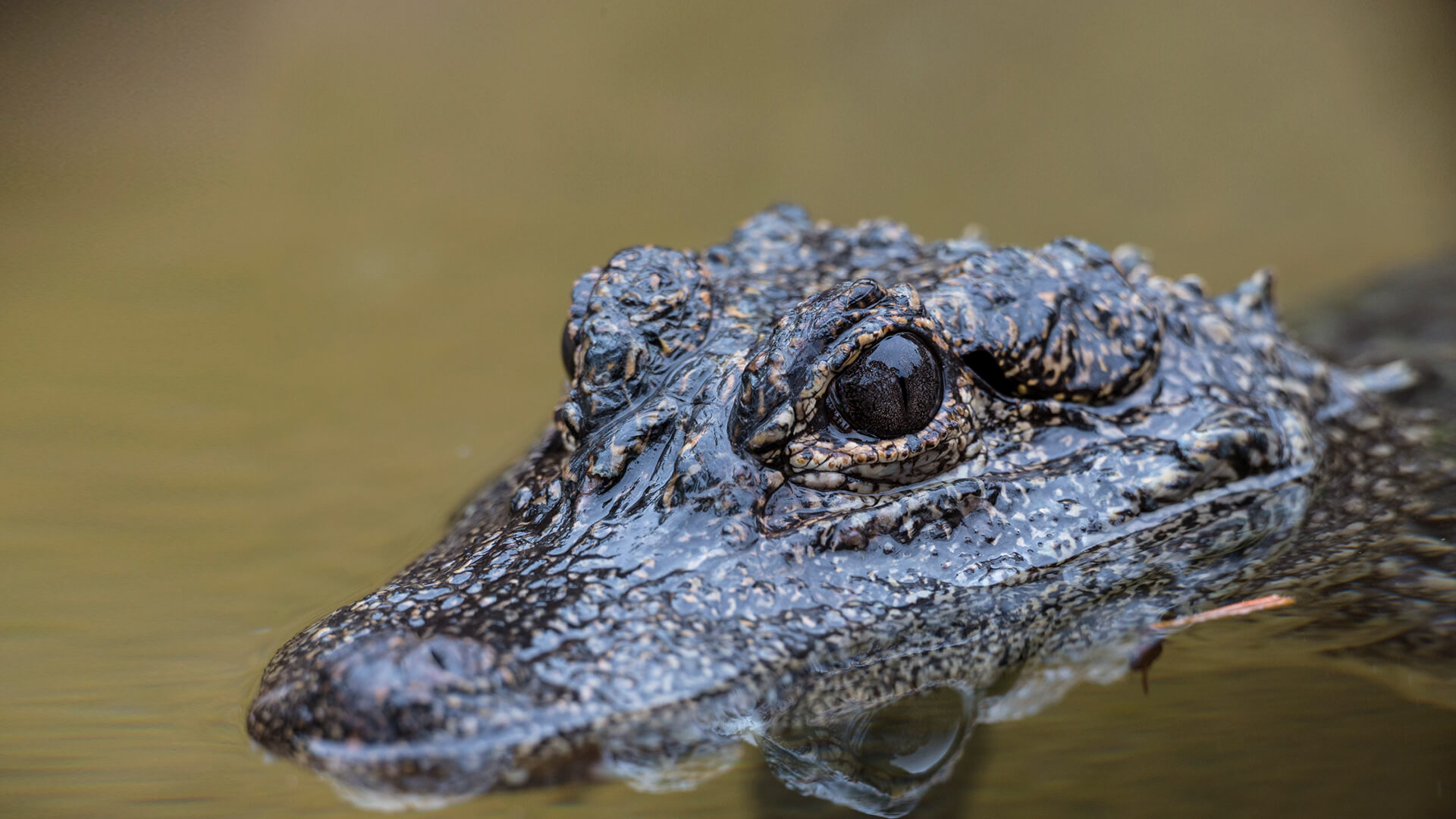
Oh, snap. Crocodilians—alligators, crocodiles, caimans, and gharials—are misunderstood, and most species face serious threats to their habitat as well as being hunted for their skin by humans. Of the 23 species of crocodilians, 7 are critically endangered, and nearly all are at risk in some part of their native range.
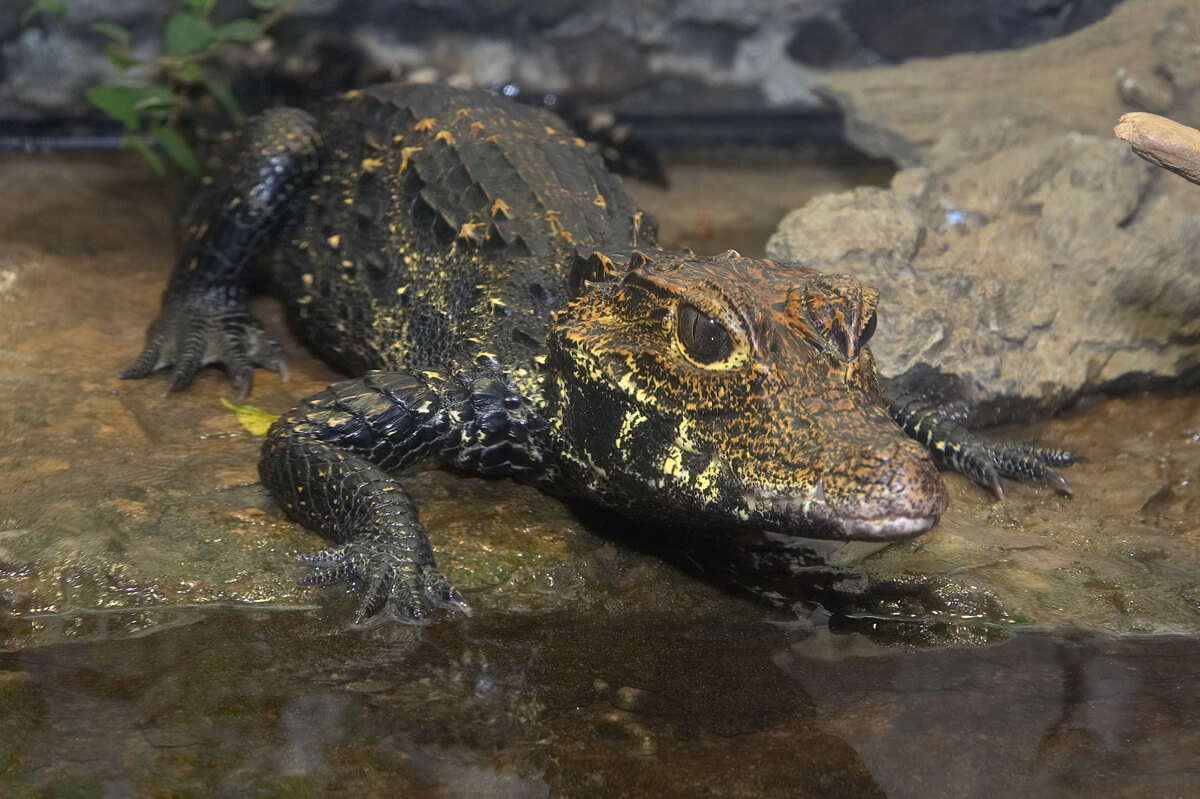
Surviving epic epochs. Appearing about 230 million years ago, the hardy crocodilians have survived nearly every earthly scenario, though human interaction and ecosystem instability are proving their most formidable challenge yet. They have outlived dinosaurs, ice ages, and more, yet they have changed very little over time. The only reptiles older than crocodilians are turtles, tortoises, and tuatara. Interestingly, crocodilians are more closely related to birds and dinosaurs than most living reptiles. Scientists have placed crocodiles and alligators in different families (Crocodylidae and Alligatoridae) based on key differences between them.
Caimans are also a type of alligator, but gharials are in a family of their own called Gavialidae. The United States is home to the American alligator and a small population of American crocodiles.
Big differences. But what is the difference is between an alligator and a crocodile? There are particular attributes and characteristics of each species, as well as a few general ways to tell the two apart:
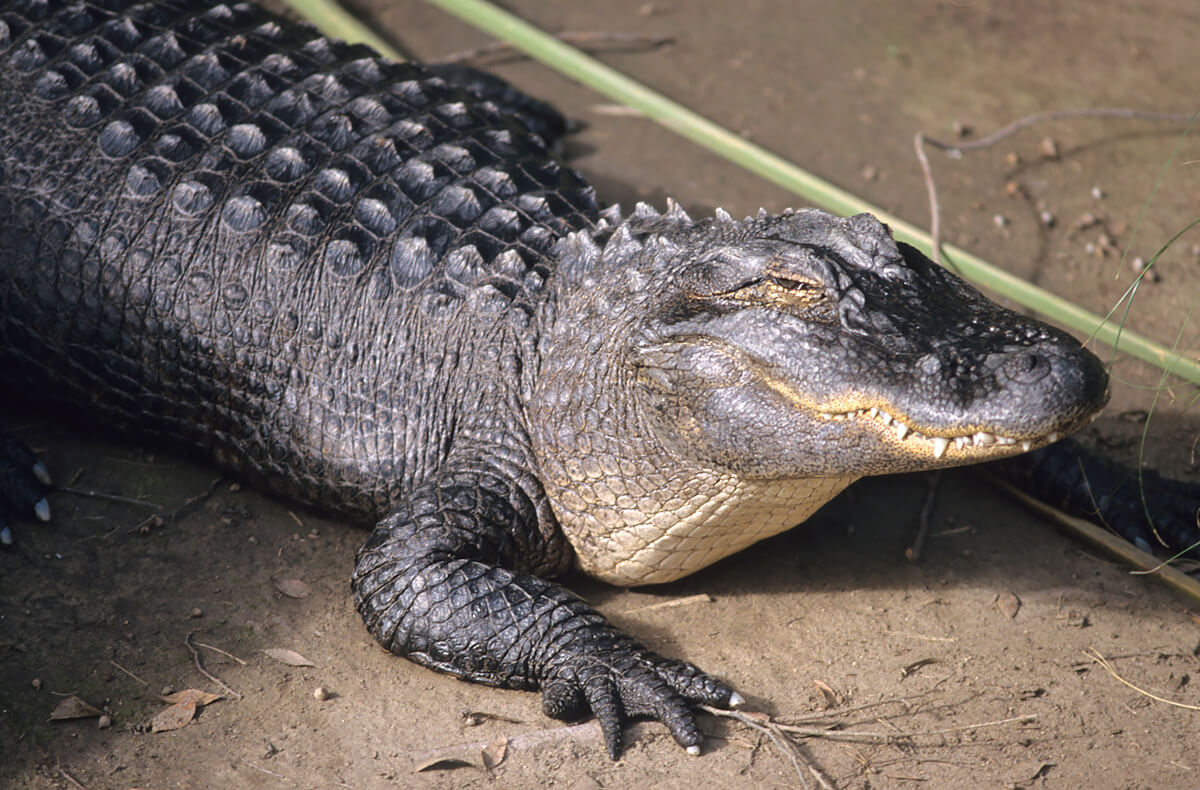
Shape of the jaw— Alligators tend to have wide, U-shaped, rounded snouts, while crocodiles tend to have longer, more pointed, V-shaped snouts.
Teeth— The fourth tooth on the lower jaw sticks up over the upper lip on crocodiles, so you can see it when their mouth is closed. In alligators, this fourth tooth is covered up.
Habitat— All crocodiles have special glands in their tongues that can get rid of excess salt, so they tend to live in saltwater habitats such as mangrove swamps and estuaries. Alligators do not have these glands, so they prefer to live in freshwater habitats.
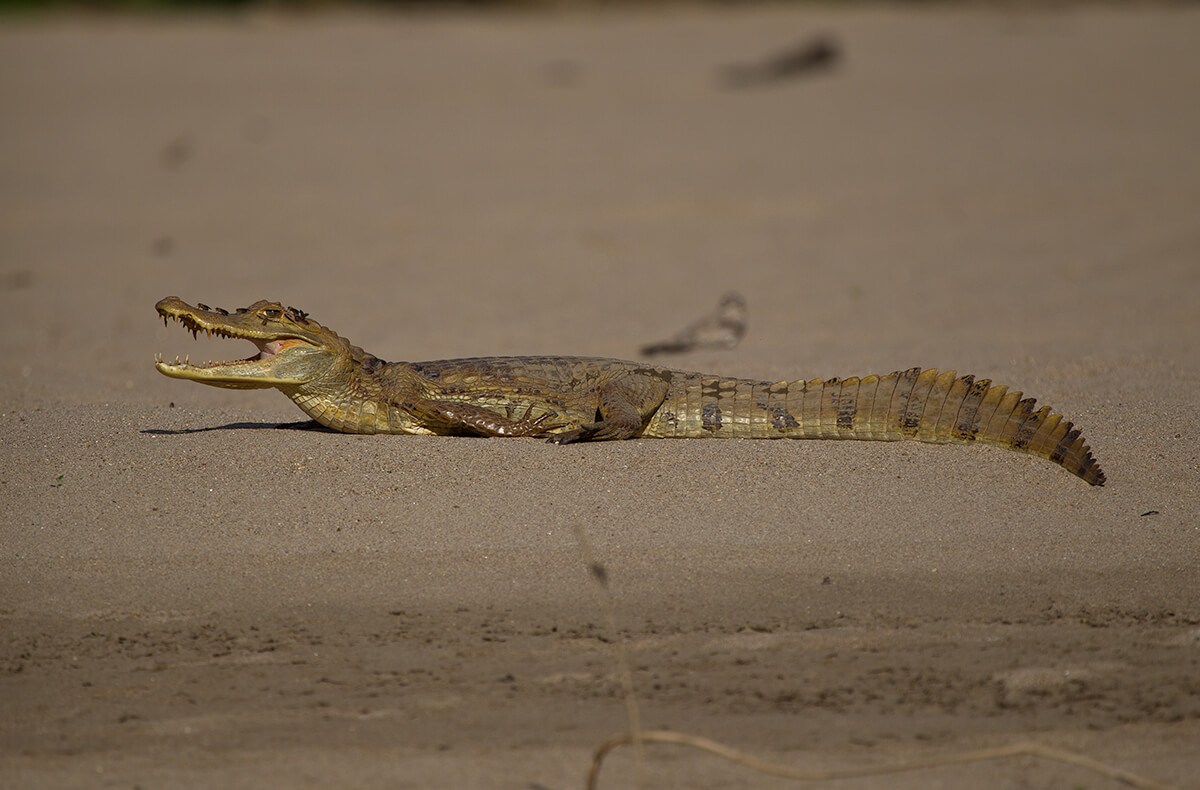
With 23 species of crocodilians, though, these general rules don't always apply—there are exceptions. For example, mugger crocodiles Crocodilis palustris have a broad snout like an alligator; while some subspecies of caiman have a narrow V-shaped snout.
Making sense(s) out of it. All crocodilians are carnivores and very efficient hunters, and their senses are more powerful than those of most other reptiles. You may not be able to see a croc's ears, but they have excellent hearing. Slits on their head lead to a well-developed inner ear, and the slits close up when the croc dives to keep water out. Crocs can even hear their young calling from inside their eggshells.
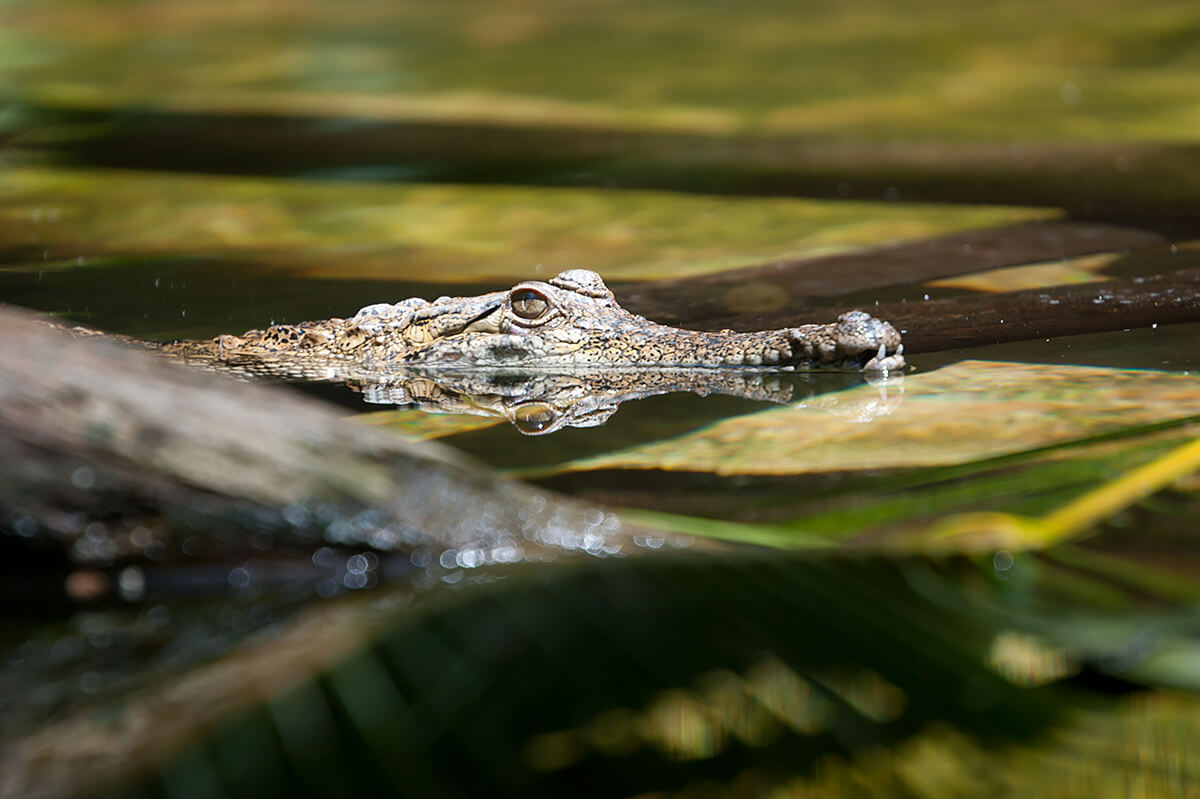
Crocodilians also have keen eyesight above water, similar to that of an owl's. Their eyes are placed on top of their head so they can see well as they cruise the water looking for prey. Crocs can probably see some color, and they have good vision at night because their vertical pupils can open wider than our round ones to let in more light. They have taste buds to taste their food, and special organs in their snouts give crocs a great sense of smell.
Special sense organs embedded in the skin of a crocodilian’s head, body, legs, and tail work like motion detectors to help the animal feel what is around it. This is a great help when searching for prey in muddy water.
That's a mouthful! As committed carnivores, one undeniable feature of crocodilians is their huge mouth. A crocodilian’s life depends on its teeth.Adorned with 60 (slender-snouted crocodile) to 110 (gharial) teeth at a time, a new tooth may move in to replace an old tooth in a very short time. This replacement occurs in “waves” along the jaw from back to front in young crocs and then later from front to back as they age. This “wave” means that every other tooth is replaced. This does not mean one set falls out all at once, but over time. There will be new teeth waiting in the sockets to replace old or damaged teeth. Crocodilians may go through 8,000 teeth in their lifetime.
In some species, their “holding teeth” are strong, but not sharp, while other teeth are sharp as glass. In large-jawed species, their bite can produce up to 5,000 pounds of pressure per square inch, allowing these animals to chomp through just about anything. (Human jaws generate about 100 pounds of pressure per square inch.) The greatest power is used in snapping the mouth closed—opening it does not use nearly the strength. These reptiles do not have sweat glands and may release heat through their mouth by mouth gaping, similar to a dog panting.
HABITAT AND DIET
Crocodilians inhabit all continents except Europe and Antarctica. They live in wetland areas, as they are most at home in or near the water. They even look like they belong there, appearing like logs that are floating in a swamp or washed up on shore. Crocs can hold their breath underwater for more than an hour. But don't be fooled by their seeming lack of activity—crocs can swim up to 20 miles per hour (32 kilometers per hour) and can run on land as fast as 11 miles per hour (17.6 kilometers per hour) for short distances if they need to.
Some species are active during the day while other species are nocturnal. Most crocs prefer to stay in water and can look uncoordinated on land, coming ashore only to bask on sandbars and river banks or to lay eggs. Yet in the water they are agile swimmers, moving with ease by using their powerful, oar-like tails and strongly webbed hind feet.
Many crocodilian species hibernate or go dormant during colder months or long periods of drought, in burrows dug in the sides of river banks.
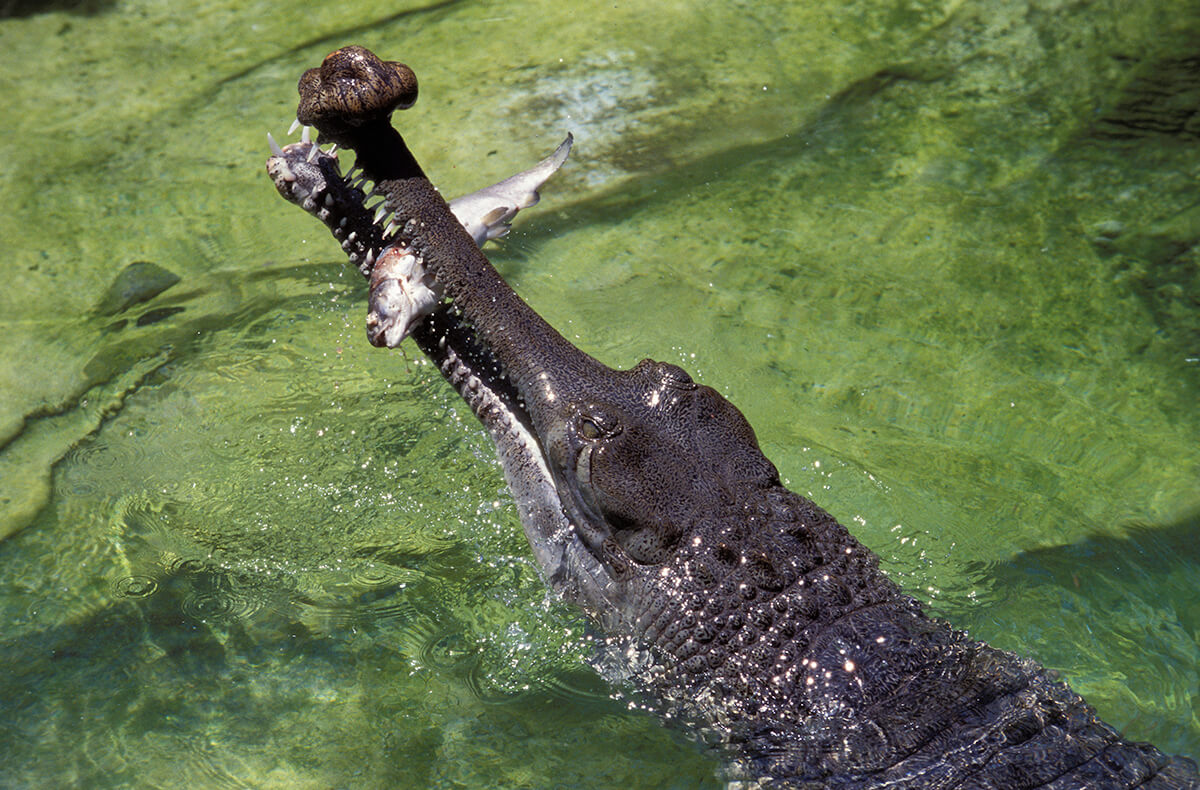
Crocodilians are carnivores and eat whatever they can catch in the water or along the shore. That includes fish, turtles, frogs, birds, pigs, deer, buffalo, and monkeys, depending on the size of the croc. Gharials and false gharials are specialists, though—with their slender snouts, they tend to prefer fish. Gharials have about 100 slender, very sharp teeth. They hunt near the river bottom, slowly moving about and then making swift sideswipes, snapping up fish that come too close to their jaws.
Crocs don't chew their food. They either tear off large pieces and swallow them or swallow the prey whole if it's small enough. The croc has to juggle the food around until it's in the right position, and then toss its head back so the food slides down its throat. Crocodilians can survive months between meals. When hungry, however, some croc species can eat up to half their body weight in one meal. At the San Diego Zoo and San Diego Zoo Safari Park, the crocodilians are offered a variety of fish to eat.
FAMILY LIFE
Male crocs are territorial and may fend off other males from his group of females. Male gharials can produce buzzing and whistling noises through the bulb on the tip of their nose to attract females—a crocodilian whistle of appreciation. American alligator males roar loudly to get a female’s attention and to warn off other males.
Mama crocs. For such ancient, fierce-looking animals, crocodilian moms take really good care of their hatchlings. Crocs are one of the few reptiles that protect their young until they are old enough to be on their own. The cow (female croc) looks for just the right place to build a nest to lay her eggs.
Some species make a mound nest out of soil and vegetable material; others dig a hole in the sandy beach for their nest. The cow then settles in nearby to guard the eggs from predators—large birds, lizards, mongooses, or even raccoons—that might try to prey on. For some species, like the American alligator, temperature within the nest determines whether a hatchling is a girl or a boy: a low nest temperature tends to produce females and a high nest temperature usually produces males.
When the babies are ready to hatch, they make grunting or barking noises from inside the egg and use a short little tooth on the end of their snout, called an “egg tooth,” to start breaking out of the leathery shell. Some croc moms even help their baby by gently biting the egg to open it up more easily.
After the young have hatched, the mother carries them to the water in her mouth and then guards them for most of the first year of their lives. Although they know how to swim from the time they hatch, sometimes the babies get to ride on Mom’s back, too. She threatens or attacks any predator that lurks too close; mothers of some species call the hatchlings to swim into her mouth for protection—making it look like the youngsters have been swallowed.
The exception to this parenting style is the gharial, which has a mouth that is too narrow to pick up her young. But gharial mothers do stay near their nest during incubation to keep it safe from predators.
CONSERVATION
American alligator. Of the 23 crocodilian species, 12 are in need of conservation help. Many croc species are hunted for their skins to make shoes and luggage, and some have suffered from a loss of habitat. But there are conservation success stories, too. The American alligator was listed as endangered in 1967, after being heavily hunted for its hide and meat, and its numbers plummeted to about 200 animals. But through managed breeding programs and conservation of populations, these alligators were declared “fully recovered” by 1987. Today, they are found in the southeastern United States, and hunting these animals is tightly regulated.
Crocodile Specialist Group. Efforts by the Crocodile Specialist Group, affiliated with the International Union for Conservation of Nature, are now underway to help other crocs that are still in trouble. The group’s Human-Crocodile Conflict Working Group currently monitors Nile crocodile attacks on humans and livestock in Africa. In China, a managed care center has been established to help the critically endangered Chinese alligator, and it has begun reintroducing alligators into their native ranges and monitoring the results. In India, juvenile mugger crocodiles raised under human care are being reintroduced to rivers.
Help for gharials. San Diego Zoo Wildlife Alliance continues its efforts to help gharials. Habitat destruction and environmental degradation have eliminated this species across much of its historical range. This species has experienced a decline of 96 to 98 percent over a 3-generation period since 1946, and its population has been reduced to a very small number of widely spaced subpopulations of fewer than 235 individuals. The drastic decline in the gharial population can be attributed to a variety of causes, including over-hunting for skins and trophies, egg collection for consumption, use in folk medicines, and killing by fishermen. Hunting is no longer considered to be a significant threat; however, the wild population of gharials has undergone a drastic decline of about 58 percent between 1997 and 2006.
The last remaining stronghold for gharials is the Chambal National Sanctuary, along a river nearly 250 miles long in north India that feeds into the Ganges River. Current conservation measures include protection of nests from predators and raising hatchlings under managed care until they reach a size that we hope gives them greater survivorship when reintroduced into their native habitats. We partner with the Madras Crocodile Bank Trust and Centre for Herpetology (MCBT), one of the largest reptile zoos in the world and one of the oldest nongovernment environmental organizations in Asia. San Diego Zoo Wildlife Alliance manages the Gharial Conservation Fund, through which we are able to support much-needed gharial conservation work in the field. We plan to continue to partner with the MCBT and other zoos for the conservation of this amazing species.
The San Diego Zoo and Safari Park are safe havens for illegally trafficked wildlife. By supporting San Diego Zoo Wildlife Alliance, you are our ally in saving and protecting wildlife worldwide.