
Kingsnake

- CLASS: Reptilia (Reptiles)
- ORDER: Squamata
- FAMILY: Colubridae
- GENUS: Lampropeltis
- SPECIES: 10

ABOUT
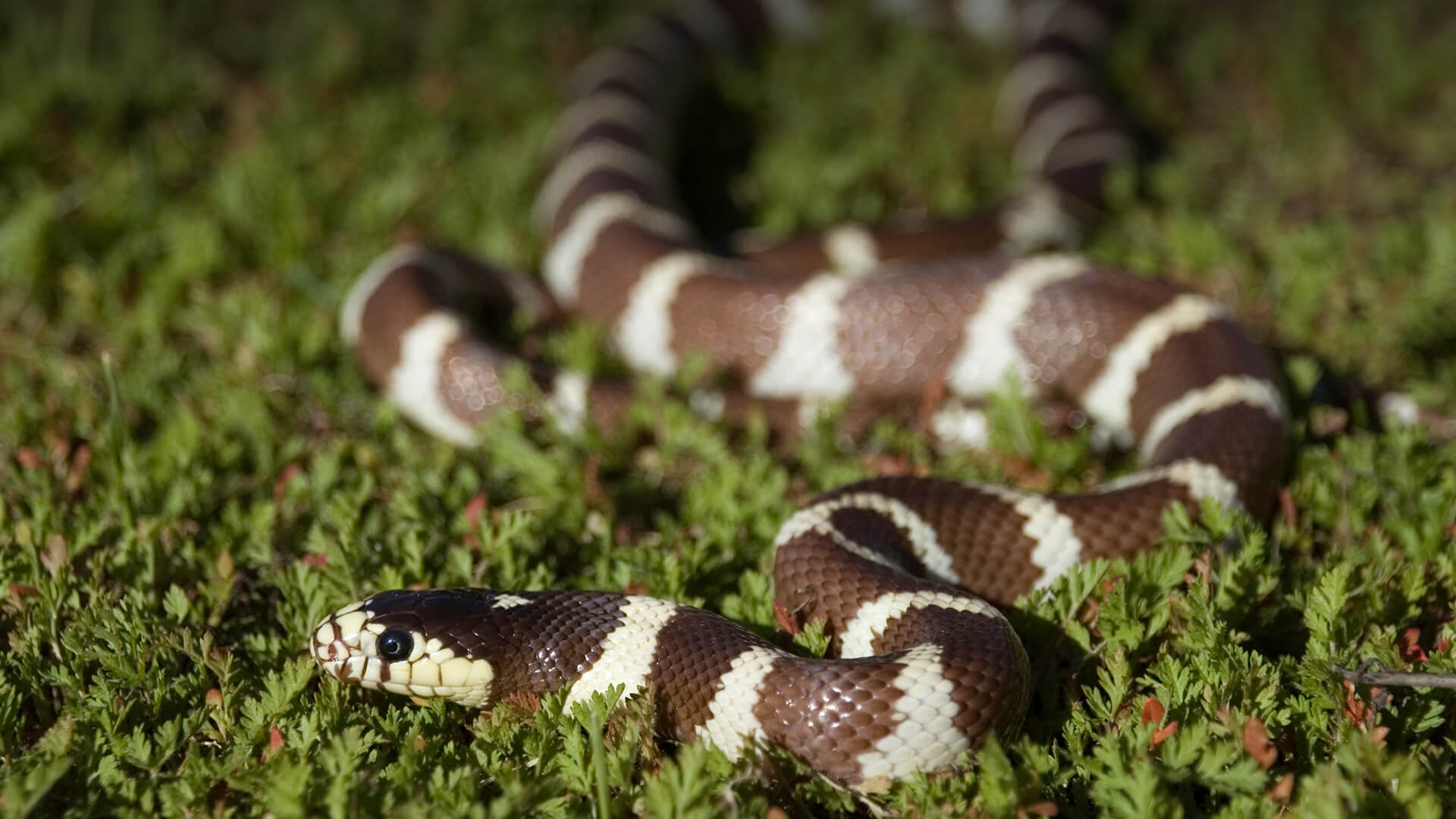
The king of snakes: If you live in California, chances are good that you've encountered a kingsnake. Kingsnakes are one of the most widespread snakes in the United States. They are ground-dwelling snakes that often consume other snakes, even venomous ones, including rattlesnakes, copperheads, and cottonmouths—kingsnakes are highly resistant to their venom
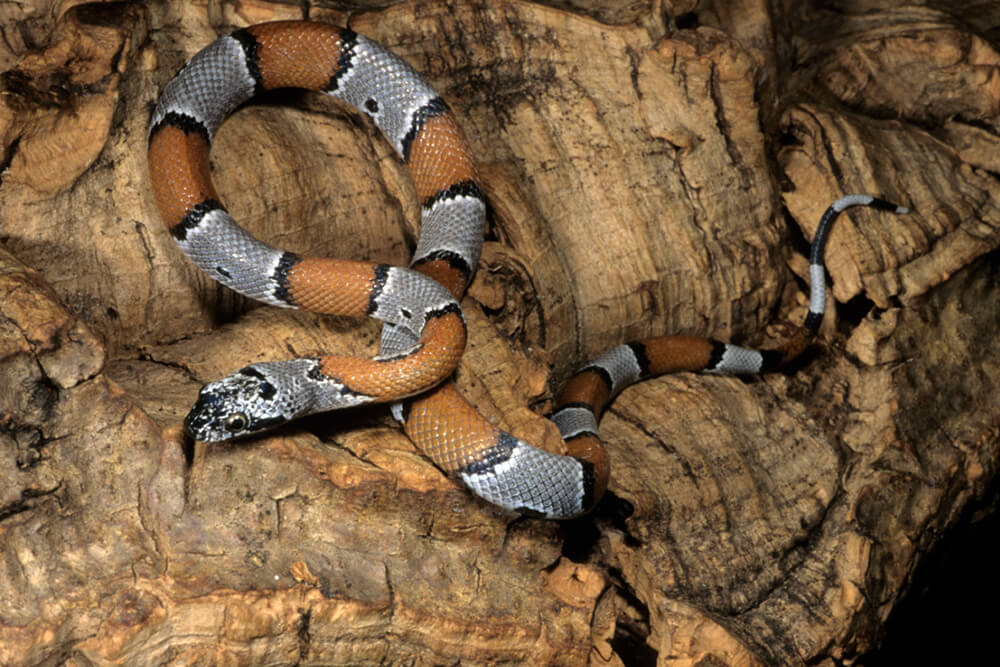
Kingsnakes have a number of pattern and color variations. The most common and easily recognized pattern is banding, usually light-colored bands on a darker background. Some California kingsnakes have stripes that run along the body from head to tail. Stripes are much less common than bands, although California kingsnakes in San Diego and Riverside counties often have them.
Sometimes the stripes are broken up into dot-dashes or even separated into spots. These patterns break up the snake's body outline so it is less noticeable to predators like hawks, eagles, coyotes, raccoons, foxes, skunks, bobcats, and even other kingsnakes.
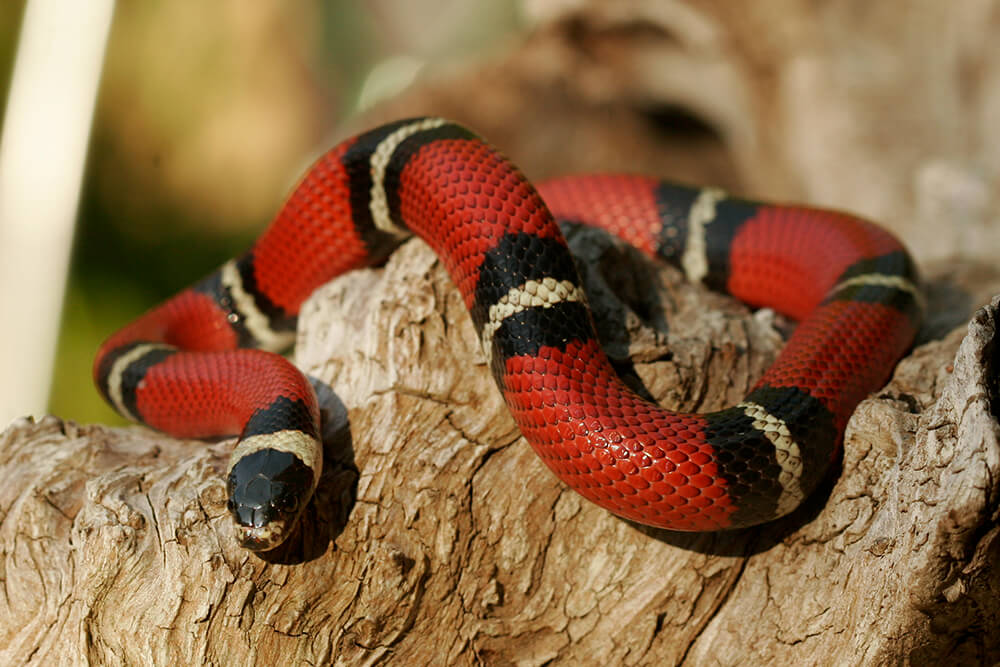
Some kingsnakes, such as the scarlet kingsnake and California mountain kingsnake, have almost the same coloration and patterning as venomous coral snakes, making it easy to confuse them. In Latin America, there are many different coral snakes with a multitude of this red, black, yellow, and white combination. One type of kingsnake is the milksnake L. triangulum, also known as a tricolor or tricolored king.
HABITAT AND DIET
King snakes live in rock outcrops, brushy hillsides, river valleys, woodlands, fields, and pine forests; and range from southeastern Canada to southern Ecuador. In Southern California, kingsnakes can be found cruising around during the day in search of food or a mate. You might also find one out and about at dusk or dawn. In most other parts of the United States where kingsnakes live, they are nocturnal. This may be because it is much hotter during the day, and Southern California has such a moderate climate. They may become more nocturnal as summer gets warmer.
During the fall, most kingsnakes find a place to hibernate until spring, unless they live in a warmer climate like Southern California, where they are much less active and can go dormant or into a short “pseudo-hibernation.”
Besides eating other snakes, kings also prey on lizards, rodents, birds, and eggs. Since they do not produce venom, kingsnakes use constriction to subdue their prey. Kingsnakes are active hunters, seeking out prey, not ambush hunters like rattlesnakes.
FAMILY LIFE
On their own. An adult female lays a clutch of eggs under leaves in the ground or a rotting log during early summer and then leaves the eggs, which hatch unattended two to three months later. Each hatchling is only a few inches long, but is completely independent from the moment it breaks out of the shell.
CONSERVATION
The Todos Santos Island kingsnake L. herrerae is at critical risk. Found on only one island, Isla Todos Santos, off the coast of Baja California, Mexico, the few snakes living there are often collected for the pet trade. Illegal wildlife trafficking can decimate native populations of species of all kinds. The San Diego Zoo and Safari Park are safe havens for illegally trafficked wildlife. “Pet” reptiles should only be acquired from reputable sources and rescue organizations.
The state of California considers the San Diego mountain kingsnake L. zonata pulchra to be vulnerable and California laws prevent the sale of native reptiles.
Snakes, including our local kingsnakes and gopher snakes, are extremely important for balancing rodent populations. If you see one of these beautiful snakes while out jogging, hiking, or just relaxing in your garden, enjoy it and consider yourself lucky to be in the presence of reptilian royalty.
By supporting San Diego Zoo Wildlife Alliance, you are our ally in saving and protecting wildlife worldwide.