
Vulture

- CLASS: Aves (Birds)
- ORDER: Falconiformes
- FAMILIES: Cathartidae (New World) and Accipitridae (Old World)
- GENERA: 14
- SPECIES: 23
ABOUT
What makes a vulture? They may not be the prettiest birds of prey, but the world would be a smellier place without vultures!
All vultures have a wide wingspan, which allows them to soar for long periods of time without flapping so much as a feather while looking for carrion to eat. They all have a sharp, hooked beak for ripping apart meat. Vultures are large compared to other birds. Their bald head and neck serve a useful purpose, allowing vultures to steer clear of infection and tangled feathers when eating decaying meat. A strong immune system allows vultures to eat rotting and possibly infected meat without getting sick.
These unusual birds are divided into two groups: New World vultures, which are from North, Central, and South America; and Old World vultures, which live in Africa, Asia, and Europe.
New World vultures have a distinctive bald head, an adaptation that helps reduce the risks of disease, because bacteria could become lodged in feathers, while the bald head and neck may be disinfected by the sun’s rays. New World vultures have nostrils that are long and horizontal, with a space between them. They do not have a voice box, so they cannot make any sound except hisses and grunts. New World vultures don’t build nests; instead, they lay their eggs in holes on high rocky surfaces or in tree cavities.
Some examples of New World vultures are turkey vultures, black vultures, king vultures, California condors, and Andean condors.
Old World vultures look like their eagle and hawk relatives. They have large, grasping talons, a voice box to vocalize with, and build nests made of sticks on rocky platforms or in trees. Old World vultures have also been around longer than the New World vultures. They have stronger feet than the New World vultures, which have feet that are not designed for grasping, and large, broad wings that allow them to stay aloft for most of the day, and a large, powerful beak with a hooked tip.
Some other examples of Old World vultures are Himalayan, Egyptian, hooded, Indian black, and palm-nut vultures, and Egyptian or Eurasian griffons.
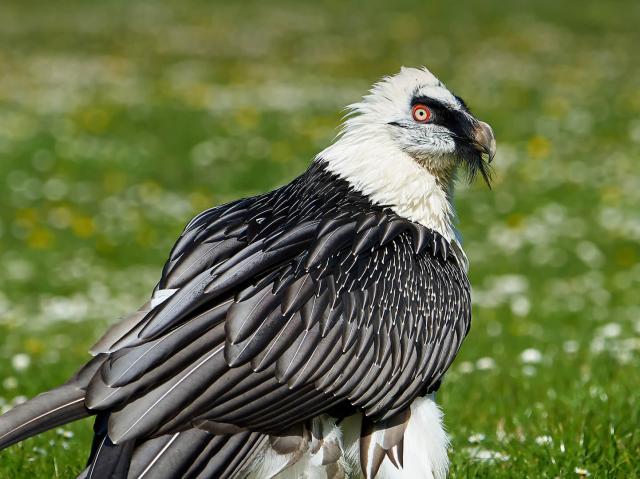
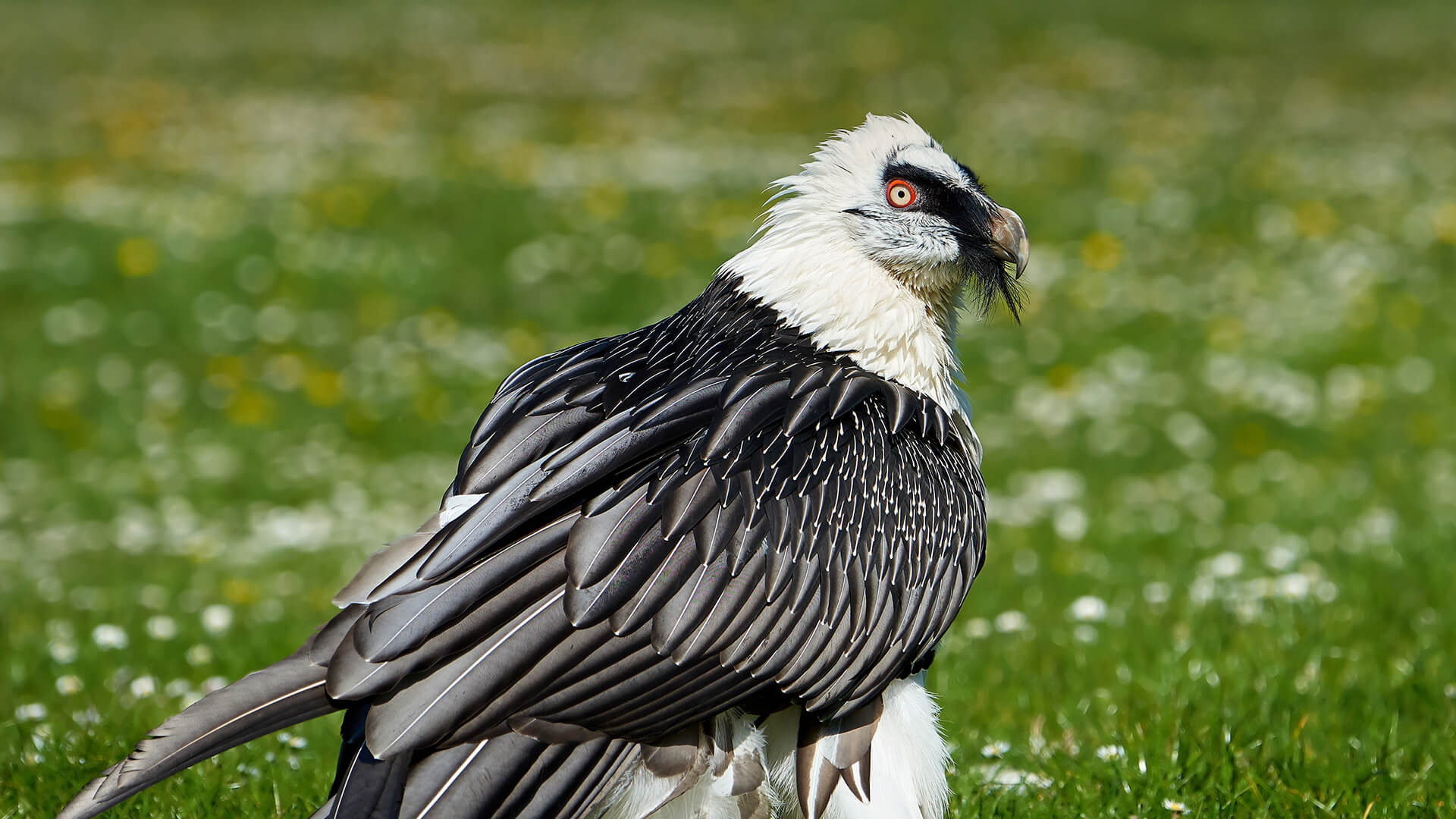
Although New World vultures are unable to make more than hissing and grunting sounds, Old World vultures can be quite vocal when feeding at a carcass, making lots of grunts, croaks, screeches, and chatter. White-backed vultures croak plaintively or squeal like pigs during a meal. Bearded vultures scream while rolling and twisting in flight during courtship.
Not many kinds of wildlife threaten vultures. Covered as they are with bacteria, they would make most predators sick if eaten. Other scavengers may threaten the vulture, mainly to get better access to a shared carcass. Vultures tend to gorge themselves, often to the point of being unable to fly. If they feel bothered as they stand about digesting their food, they simply regurgitate to lighten the load and fly off.
Many people look at the vulture as a sign of death, but some cultures admire the birds. Ancient Egyptians connected the Egyptian griffon to their goddess Nekhbet, guardian of mothers and children. Griffon images are found in early Egyptian paintings and drawings and even had a place on the crown of the pharaoh, alongside the cobra. In some Indigenous North American cultures, California condors are important in mythology and burial rituals.
Vultures are also important in India, as they help remove dead wildlife without spreading disease. In other parts of Asia, religious and cultural traditions call for the carcasses of domestic animals to be left out for “disposal” by vultures. In some regions, even human remains are left out for the vultures prior to burial.
Vultures may not have the cleanest job, but you will never hear them complaining!
HABITAT AND DIET
Home is where the food is! Vultures are pretty flexible when it comes to their habitat, as long as there is food, although you won’t find them in Australia, polar regions, or most small islands. They are pretty adaptable in different environments.
Vultures are scavengers. They usually eat carrion, although sometimes they attack newborn or wounded wildlife. It seems that once food is located, the information is relayed rapidly to other vultures in the vicinity. Once one vulture lands, many more land and join in the feast. Because vultures are generally quiet, it is likely that the information is passed visually by behavioral cues for one bird to another until a regular orgy of eating begins.
Vultures tend to eat as much as they can, because they never know when they will find their next meal—and it could be as long as two weeks before they do! Like many other birds, vultures have a throat pouch called a crop that can store food for eating at a later time or can be regurgitated to feed to their young.
Different types of vultures have their own flair for getting their food, and their ability to use “tools” to get that food is unique among birds. The Egyptian vulture breaks open ostrich eggs by dropping stones on them. Lammergeier or bearded vultures carry bones into the air and drop them onto favored rocky areas to break them open; the birds then fly down to eat the nutritional marrow inside, using their specialized tongue. In Africa, many different vulture types gather at a carcass to eat, but there is a pecking order: larger vultures get to eat first while the smaller ones wait their turn.
Turkey vultures are found all over North and South America, found in open country, woodlands, farms, and in our backyard at the San Diego Zoo Safari Park! They are about 27 inches (70 centimeters) tall and have a wingspan of about 5.6 feet (1.7 meters). These vultures have a big, dark-brown body, a red, bald head, and pink legs and feet. They hunt for their food by smell, feast in groups, and prefer only the tender meat. Turkey vultures are a very important part of North America’s cleanup crew.
At the San Diego Zoo and San Diego Zoo Safari Park, the vultures eat rabbits, rats, cow spleen, oxtails, and a fortified meat-based commercial carnivore diet.
FAMILY LIFE
By day, vultures spend their time in the sky searching for carrion. Unlike other raptors that must be able to maneuver quickly to swoop down on prey, vultures only have to stay in flight for hours at a time, high enough to have a good field of vision to spot food. They’re specially built for this task with a huge expanse of wing feathers and a short tail. They rarely flap their wings, preferring to soar gracefully on air currents. If they hit a warm pocket of air in the sky, called a wind thermal, some vultures have the ability to soar for hours without once flapping their wings!
At night, they settle down to roost. White-backed vultures roost in a tree with a group of 10 or 12 others. Bearded or lammergeier vultures live in groups of up to 25 birds. Ruppell’s griffons are social creatures that live in colonies that may have as many as 1,000 pairs; the colony is noisy in the evening with its members’ loud, harsh calls. Turkey vultures are only social when roosting; their roost may be a single, large tree used year after year.
Vultures try to attract a mate by soaring in the sky around each other. The male shows off his flying skills by almost touching the female’s wing tip as he flies by to impress her. Normally, vultures are social birds that hunt in flocks, but when it comes to starting a family, they pair for life. Old World vultures make a nest in an overhung ledge, rocky crag, or tree, constructed with sticks and perhaps lined with grass. New World vultures don’t bother with nest making at all and merely lay their egg(s) in a cave or under a rocky overhang, on the ground under bushes or rock piles, or in tree hollows or fallen logs.
The mother vulture lays one egg, typically, if she is one of the larger vultures, two eggs if she is one of the smaller vultures. Both parents work as a team to incubate and feed the chicks. Of course, chicks don’t drink milk; instead, the parent regurgitates meat into the chick’s mouth to feed it.
When the chick is young the parents pick up small pieces of food and feed them to the chick, but as it gets older, it picks up these regurgitated food items on its own. Chicks remain in the nest for two to three months and continue to depend on their parents for a period of time after fledging, until they learn how to find and compete for food on their own. By the time they are ready to fledge, at three to six months old, the chicks are nearly the same size as their parents and are fully feathered, but their coloration is different.
CONSERVATION
Things we humans put in our environment seem to be causing rapid declines in vulture populations. For example, in India and other parts of South Asia in the 1990s, huge numbers of vultures died. In 2000, San Diego Zoo Wildlife Alliance joined the investigation to determine what was killing the birds. The outcome surprised everyone: an anti-inflammatory drug used by veterinarians and ranchers to help livestock. The vultures were eating livestock that had been treated by the drug, became sick, and died. Efforts were made to restrict the use of the drug in livestock.
Poachers in Africa and Asia are known to poison the carcasses of elephants they have killed, after they take the tusks, to kill any vultures that come to clean up the mess, believing the gathering birds might reveal the scene of the crime. Ranchers frustrated by large cat attacks on their livestock poison cattle carcasses to kill the carnivores, but the poison also kills the vultures that come to pick the carcass clean. And vultures die from eating meat killed by hunters using lead bullets; the birds slowly die from lead poisoning. A study done in southern Africa revealed that about 25 percent of the white-backed vultures Gyps africanus tested had high levels of lead in their blood.
The California condor Gymnogyps californianus, white-rumped vulture Gyps bengalensis, Indian vulture Gyps indicus, slender-billed vulture Gyps tenuirostris, and red-headed vulture Sarcogyps calvus are at critical risk.
To conserve these graceful scavengers, breeding programs, education, and awareness programs have been started for endangered vultures by organizations like The Peregrine Fund and Vulture Rescue. San Diego Zoo Wildlife Alliance is significantly involved in the California Condor Recovery Program.
There are people working to protect these birds, and so can you! Place trash in the right bin, don’t use dangerous chemicals, dispose of harmful substances responsibly, and recycle. If you are a hunter, please use non-lead bullets. These are all ways that you can help wildlife, including those misunderstood vultures.
By supporting San Diego Zoo Wildlife Alliance, you are our ally in saving and protecting wildlife worldwide.