
Spider

- CLASS: Arachnida (Arachnids)
- ORDER: Araneae
- FAMILIES: 111 worldwide (with 50 of those found in San Diego County)
- GENERA: 3,642 worldwide (178 in San Diego County)
- SPECIES: About 39,500 have been identified (428 in San Diego County)
ABOUT
Spideriffic! Hurray for these amazing creatures! Spiders often get a bad rap, and some people are afraid of them. But only a few species are dangerous to humans, and even then, they won't bite unless they feel threatened. Spiders are not insects, and they are different in many ways. For example, spiders have two body parts: the front body section, called the cephalothorax (seff-a-la-THOR-ax), and an abdomen; insects have three body parts: a head, thorax, and abdomen. Spiders have eight legs while insects have six, and, in general, spiders have only "simple" eyes (not the "compound" eyes that give many insects much better vision.
All spiders are both carnivorous and venomous, but only a small percentage of them are potentially dangerous to humans. Spiders use their venom to paralyze their prey and only bite otherwise if cornered or trapped. Black widows are one of the most feared and misunderstood spiders. They do have powerful venom, but they are timid and shy. Still, it is best to avoid black widows. They are usually large-bodied black spiders with a red hourglass shape on the underside. The United States actually has five species of widow spiders: three black, one brown, and one red.
The most venomous spider in the world (to humans) might be the Sydney funnel web spider. Before the development of antivenin, the venom from the bite of this spider produced symptoms within minutes and often resulted in death. The title of “most venomous,” however, is hard to claim, as venom reacts differently in each individual.
HABITAT AND DIET
Anywhere can be home: Spider habitats range from deserts to rainforests to backyards and everything in between. There are spiders that float ON the water, such as fishing spiders, those that live UNDER the water, such as diving bell spiders, and even spiders that live as parasites on the webs of other spiders. Some kinds of spiders build a clever "trapdoor" to ambush prey, some build shared webs to snare victims, and some even keep a web handy to throw as a net over an unsuspecting fly!
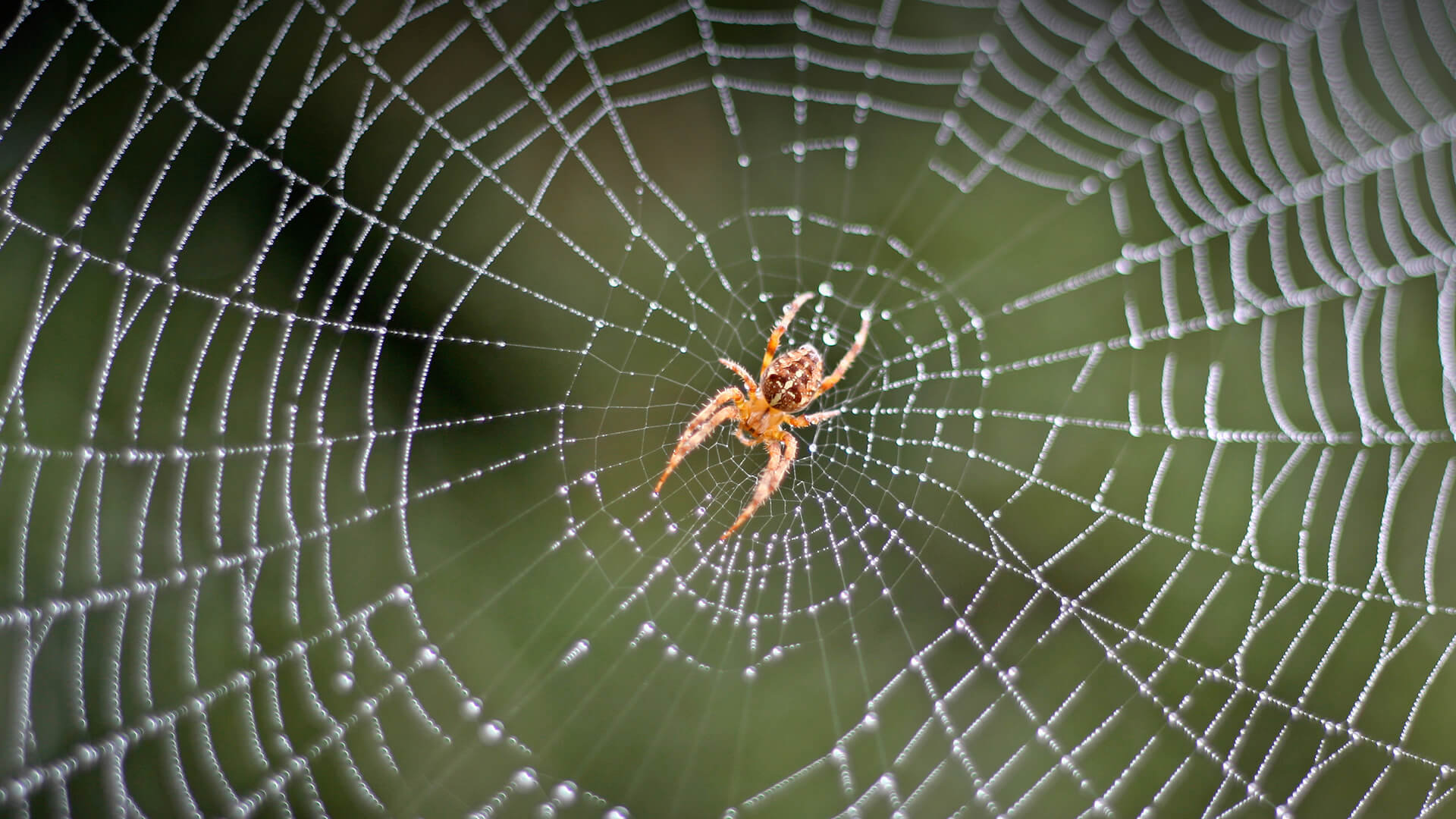
Spiders are famous for the intricate webs they weave out of strong strands of protein called silk. All spiders can make silk in their bodies and push it out between special body parts called spinnerets at the end of the spider's abdomen. Webs are a great way to catch a meal, but not all spiders use webs for that purpose; some use webs like a clothesline to hang their egg sacs or to line their burrow homes. The shape and size of webs also varies among all the various kinds of spiders: in fact, spiders are grouped taxonomically according to the type of web they make. Here are some examples:
Tangle-web spiders: This group includes the black widow. These spiders make messy looking, non-sticky webs that are often found in bushes or on (or in!) buildings. The webs are often called cobwebs. The spider hangs upside down in the middle of its web, waiting for ants or crickets to get tangled up.
Orb-web spiders: These spiders create the most familiar webs (think Halloween time!) made of a sticky silk to capture prey. It usually takes about 30 minutes to spin this type of web. Once prey is caught in the web, the spider quickly wraps it in more silk to keep it secure until dinnertime. Most spiders that spin orb-shaped webs build a new web every day, recycling their silk supply by eating the old web.
Funnel-web spiders: Spiders from this group build webs that funnel down into the entrance of their burrow. The spider waits inside the burrow for its next meal, such as a cockroach, to trip over one of the silky lines anchoring the web. The spider feels the vibration and dashes out to grab its prey.
Nursery-web spiders: Using their silk webbing for the egg sac, the female fastens the sac to some leaves and encloses it within a web to protect the eggs until they hatch.
Spider silk is the strongest known natural fiber, with a breaking strength greater than bone or tendon and half the strength of steel! It was historically used for cross hairs in guns, and for fishing nets and stockings. Spider silk is a marvelous product, but because most spiders like to live alone and will eat other spiders, the silk cannot be produced in large quantities as with silk moth larvae, which are used to make silk cloth.
Most spiders do not jump but rely on their individual adaptations to catch prey (snaring in webs, hiding in burrows, or camouflaging perfectly against their background). The jumping spider, as expected, does jump on its prey and is said to be able to jump 40 times its own body length! Jumping spiders are one group of spiders that are thought to have excellent vision. Wolf spiders, true to their name, chase down their prey.
Many spiders use their silk as a "dragline," so if they are knocked off their web or other resting spot, they can climb back up to safety. Young spiders can float or ride on the wind to a new area by releasing a long, silken thread for the wind to catch. This unique way of travel is called “ballooning.”
FAMILY LIFE
Female spiders produce egg sacs with up to 2,500 eggs inside, depending on the kind of spider, but most baby spiders (called spiderlings) are eaten before they have a chance to mature. A mother spider usually doesn't stick around to protect her eggs or her young, so the spiderlings are on their own as soon as they hatch. However, some mother spiders cover their egg sacs with mud, which hardens to make a protective coat, or with small pebbles.
CONSERVATION
Spiders often get a bad rap, and some people are afraid of them. But only a few species are dangerous to humans, and even they won’t bite unless they feel threatened.
Like so much wildlife, spiders are affected by habitat loss and by nonnative wildlife introduced by humans that can often take over spider habitat. Some spider species threatened by international trade are protected by the Convention on International Trade in Endangered Species (CITES). Spiders can only be legally traded if CITES permits are obtained from the exporting country. When the U.S. Fish and Wildlife Service confiscates illegal shipments of spiders, they occasionally bring the spiders to the San Diego Zoo for care. The incoming spiders are given an assessment that includes measuring the leg span to approximate the age of the spider, determining sex, and recording the spider's overall health.
Spiders are very important to the health of the ecosystem, because they eat insects and other arthropods and keep their numbers in check. Spiders are also food for many predators, including some humans. (Tarantulas are considered a delicacy in some places!) Medical researchers are studying the chemicals in spider venom for use in treating diseases in humans.
By supporting San Diego Zoo Wildlife Alliance, you are our ally in saving and protecting wildlife worldwide. Let's hear it for spiders!