
Wombat

- CLASS: Mammalia (Mammals)
- ORDER: Diprotodontia
- FAMILY: Vombatidae
- GENUS: Vombatus, Lasiorhinus
- SPECIES: Vombatus ursinus, Lasiorhinus krefftii, Lasiorhinus latifrons
ABOUT
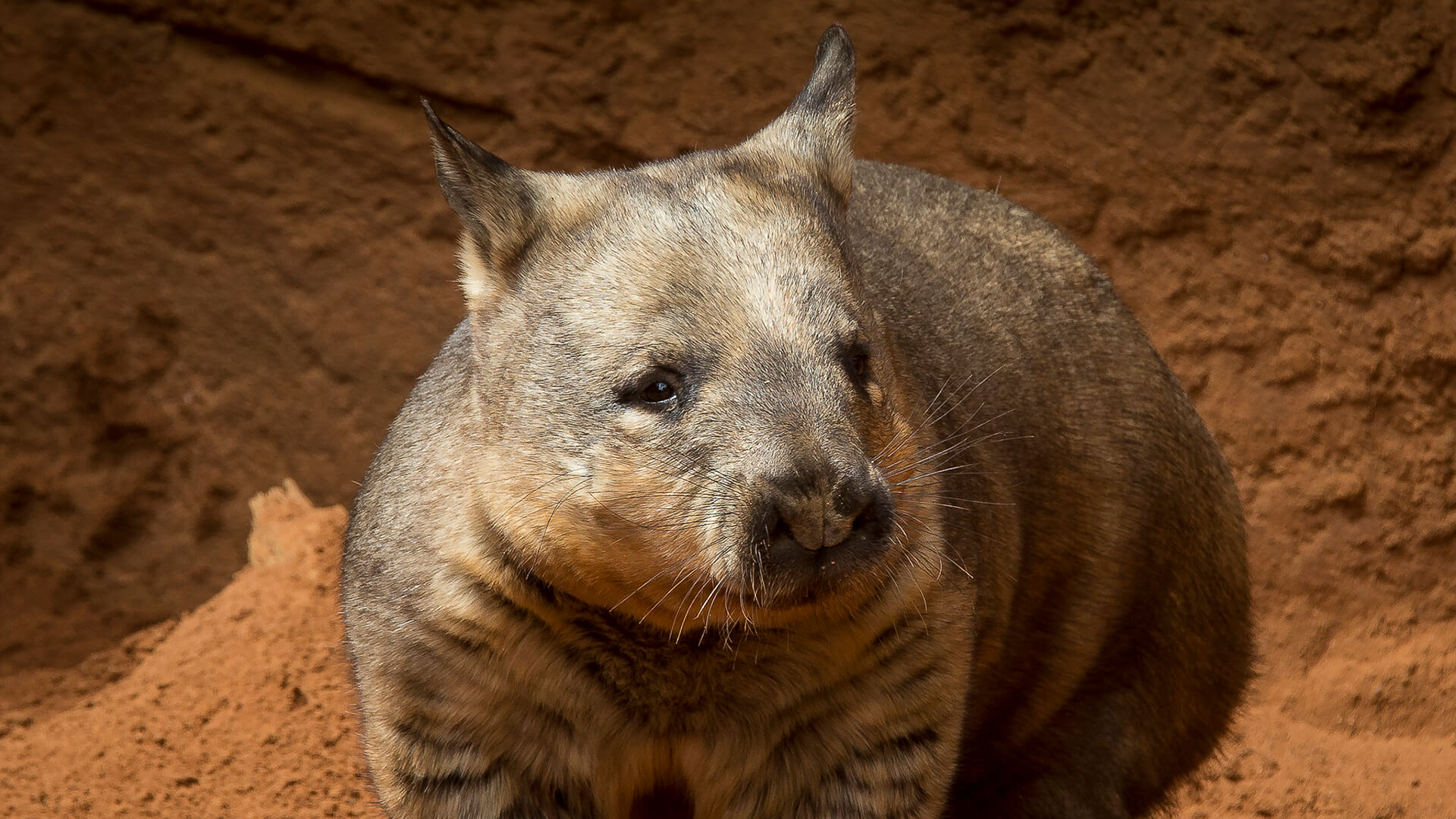
What's a wombat? Wombats are one of the oddest-looking animals you'll ever see! Native to Australia, the comical animals look like short, stocky bears. But wombats are really marsupials, related to koalas and kangaroos. They are either sandy brown or grayish black to blend in with the landscape and avoid predators. The sturdy wombat is most active in the early evening and at night.
There are three species of wombat: common, or bare-nosed wombats, which have a bare nose; and two species of hairy-nosed wombats that have, well, hairy noses! The common wombat has coarse fur and short, round ears while the hairy-nosed wombats have soft fur and much larger ears. Although wombats look cute and cuddly, they tend to have a short temper and can become very aggressive if they feel threatened.
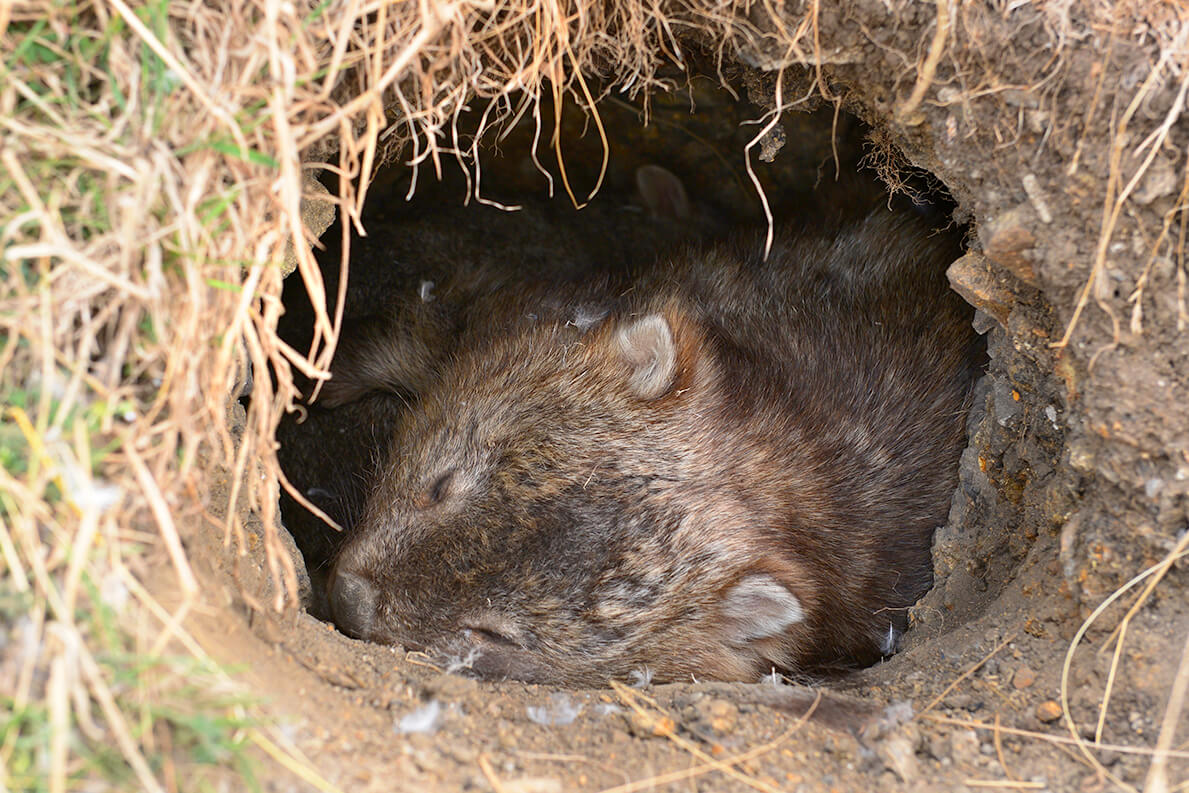
Can you dig it? Well, wombats can! Wide, strong feet with large claws make the wombat a master at “digging it”! From the burrow, they create impressive tunnels underground that lead to sleeping chambers. They dig with great zest and energy, moving up to 3 feet (1 meter) of dirt in a single night. The burrow usually has one entrance but then branches out into several tunnels that can reach up to 650 feet (200 meters) in length. The common wombat remains fairly solitary in its burrow home, but the southern hairy-nosed wombat often shares its home with up to a dozen other wombats.
HABITAT AND DIET
A mighty rear end: The common wombat is the most numerous and widespread, living in forests along the eastern coasts of Australia and in the island state of Tasmania (part of Australia). The two hairy-nosed species live in the dry grasslands of northern and southern Australia. Unfortunately, two formidable predators inhabit the same areas: the dingo and the Tasmanian devil.
Wombats walk with a waddle. They may look pudgy and slow, but they have powerful legs and can run up to 25 miles per hour (40 kilometers per hour) when needed! If threatened, a wombat dives headfirst into a tunnel, blocking the entrance with its sturdy backside. Wombats have a tough rear end with extra-thick skin and a teeny-tiny tail, so a bite to the backside is not much of a threat. They have been known to crush intruding animals against the hard walls and low ceilings of their burrows.
Like kangaroos, wombats spend most of their time grazing. They use their rodent-like teeth and very strong jaws to grip and tear food such as grasses, roots, shoots, tubers, and even tree bark. A special stomach gland helps wombats easily digest the tough food.
Wombats don't need much water, getting most of their needed moisture from the plants they eat. They are often seen grazing at night, when their coloration helps them blend in, but they may also feed during the day if it’s cool and cloudy.
FAMILY LIFE
Wombat females give birth to a single young, called a joey, every two years. Like all marsupial females, the wombat has a pouch—but it opens toward the mother’s rear, rather than toward her head. This keeps dirt from filling up the pouch when the mother wombat is busy digging!
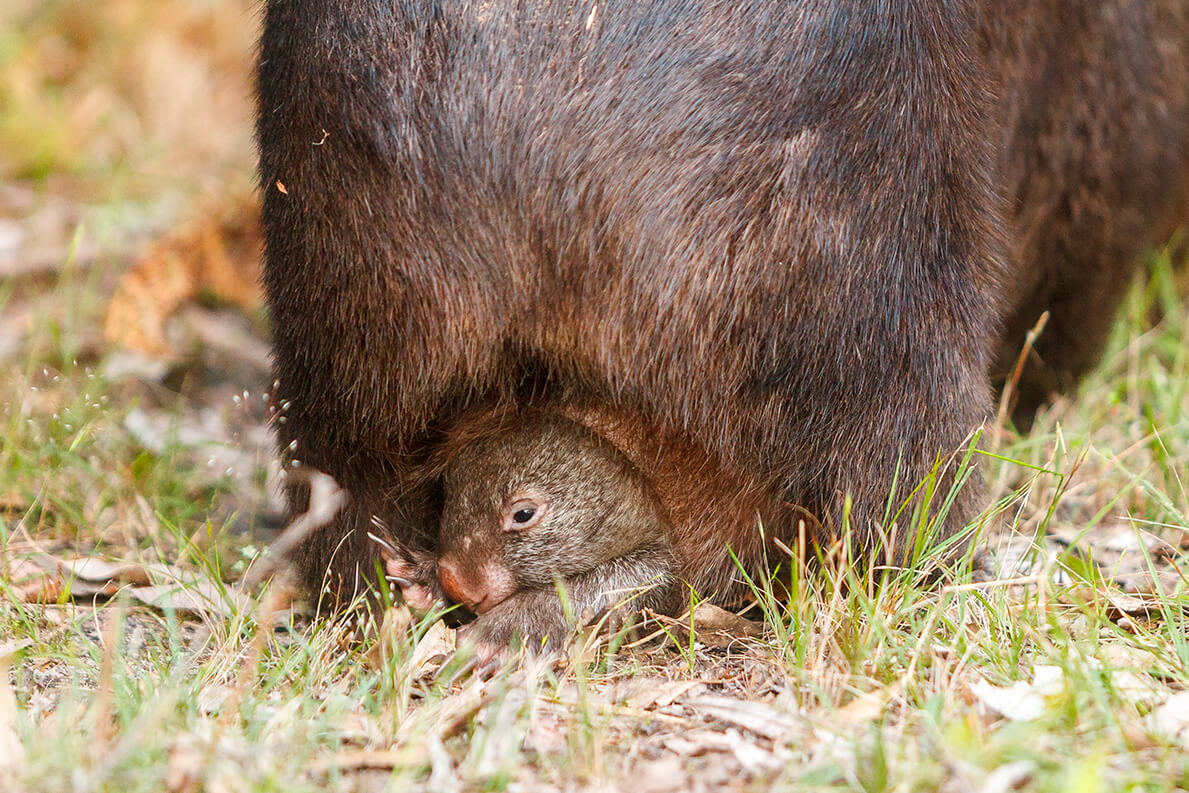
When the joey is born, it is the size of a jellybean and not completely developed. It must crawl from the birth canal into the mother's pouch and attach itself to a nipple. The joey doesn't even try to peek out of the pouch until it is 6 months old, and it stays in this pouch for 9 to 10 months of age, growing and getting all the nourishment and warmth it needs there. The youngster continues to return to the mother to feed until it is 12 to 15 months of age.
CONSERVATION
In 1906, the Australian government declared wombats pests and encouraged people to kill them. From 1925 to 1965, some 63,000 wombat skins were redeemed for cash. Fortunately, this practice has stopped. Today, although the common wombat and southern hairy-nosed wombat populations are more stable than that of the northern hairy-nosed wombat, all three species face an uncertain future. Land clearing, habitat competition with cattle, poison bait set out for rabbit control, drought, road deaths, predation, and disease are all ongoing threats.
But the northern hairy-nosed wombat is in danger of becoming extinct. Currently, there are just over 100 individuals, all found in Epping Forest National Park, located in eastern Australia. Grazing sheep and cattle, as well as a long drought, have reduced the grasslands the wombat needs to survive. Dingoes killed a good number of northern hairy-nosed wombats in 2000, but in 2002, a fence was built around the Park to help protect this wombat species from predators. It is hoped this will help the wombat make a comeback.
San Diego Zoo Wildlife Alliance helped to support wildlife rescue and rehabilitation work in Australia after the devastating bushfires of 2009 and 2020. By supporting San Diego Zoo Wildlife Alliance, you are our ally in saving and protecting wildlife worldwide.