
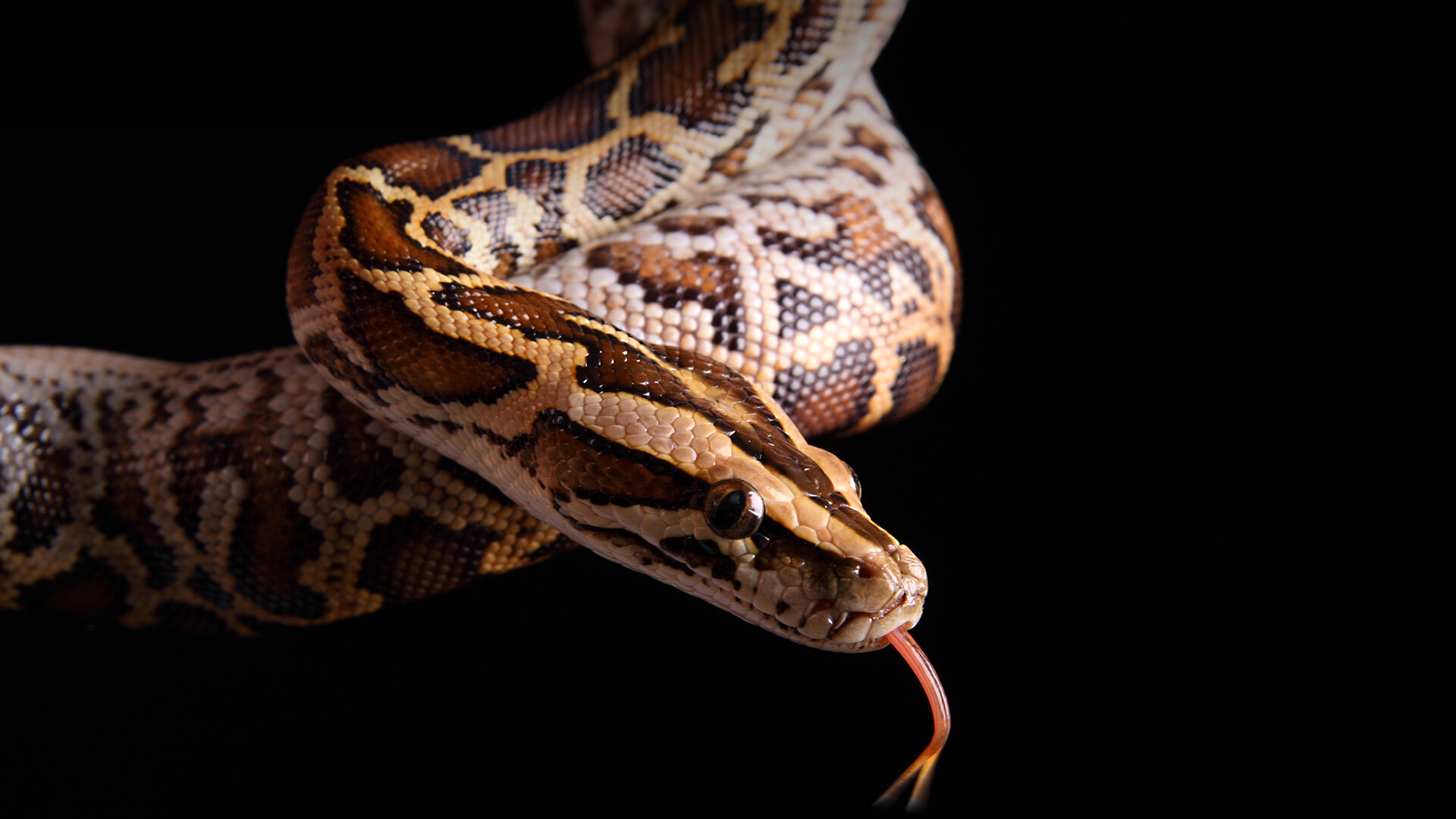
Python

- CLASS: Reptilia (Reptiles)
- ORDER: Squamata
- FAMILY: Boidae
- GENERA: 8
- SPECIES: 33
ABOUT
Pythons, boas, and anacondas: what's the difference? Reticulated pythons, boa constrictors, and anacondas are some of the biggest snakes in the world, and many people get confused about which is which.
The first thing to note is that the anaconda is a species of boa, not a separate type of snake. That leaves two groups: pythons and boas. These snakes are constrictors, killing their prey by wrapping around it and suffocating it. And they are considered primitive snakes with two lungs (most snakes have only one) and the remnants of hind legs and pelvic bones. But they have differences, too.
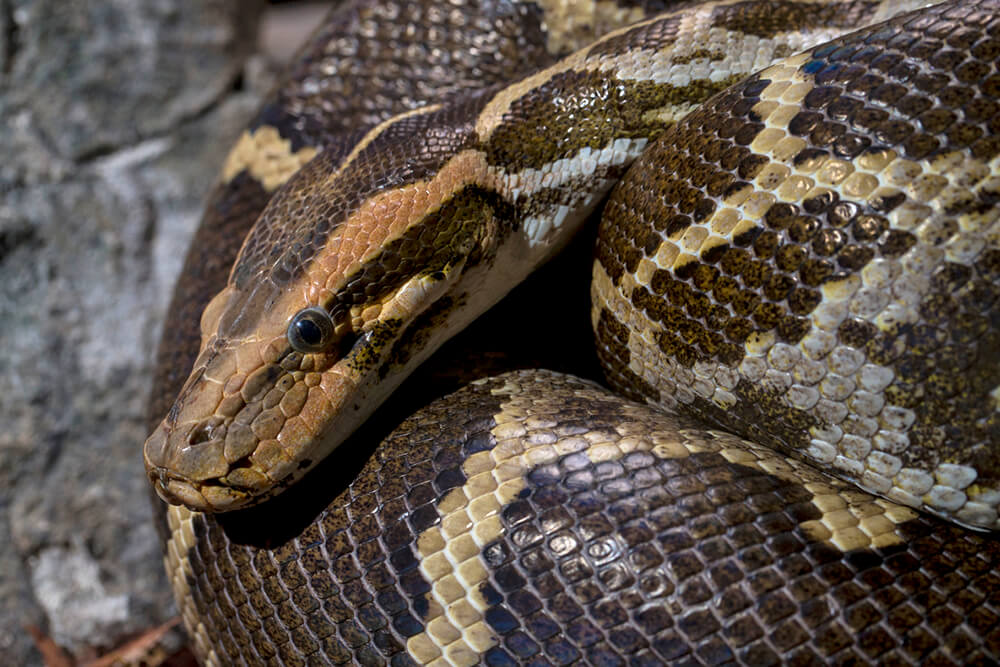
Pythons have one more bone in their head than boas do and some additional teeth. And pythons are found in the Old World (Africa, Asia, Australia) while boas live in both the Old World and the New World (North, Central, and South America). But the biggest difference is that pythons lay eggs while boas give birth to live young.
Because of their bulk, pythons move by traveling forward in a straight line, which is known as "rectilinear progression.” This is accomplished by stiffening the ribs to provide support, then lifting a set of ventral (on the belly) scales and moving them forward so the loose ends grip the surface, pushing the snake ahead. This type of movement works on the ground as well as in trees. Pythons can’t move very fast though—only about 1 mile per hour (1.6 kilometers per hour) on open ground. But since they don’t have to chase their food, they don’t really need to move quickly.
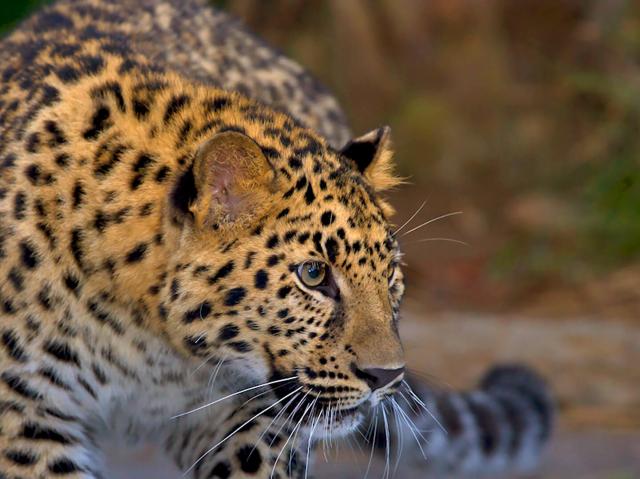
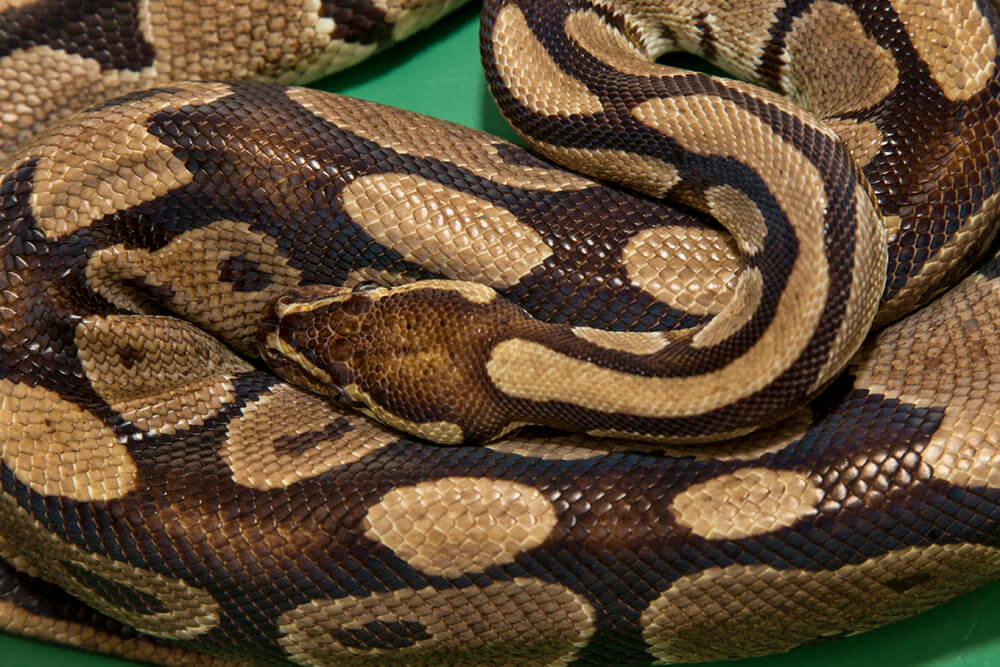
Despite being large, powerful snakes, pythons have predators. Small, young pythons may be eaten by a variety of birds, wild dogs and hyenas, large frogs, large insects and spiders, and even other snakes. But adult pythons are also at risk from birds of prey and even lions and leopards. The snakes are most vulnerable after a large meal, when they are less inclined to move quickly. If threatened, some pythons roll into a ball and tuck their head in the coils; others may try to escape, get into a striking, or “S”-shaped, position, or use their constricting power if grabbed.
HABITAT AND DIET
Pythons can be difficult to find and observe long enough to learn their habits. They are found in rainforests, grasslands and savannas, woodlands, swamps, rocky outcrops, desert sand hills, and shrub lands, depending on the species. Pythons may be active day or night, depending on species, habitat, and when prey is most active.
Most pythons seek shelter in tree branches or hollows, among reeds, in rocky outcrops, or in abandoned mammal burrows. Two exceptions are the woma and the black-headed python, the only pythons known to create their own burrow by digging with the head and scooping out the dirt by curving their neck. Their jaws are countersunk, lower jaw fitting inside the upper jaw, which keeps dirt out of the snake’s mouth.
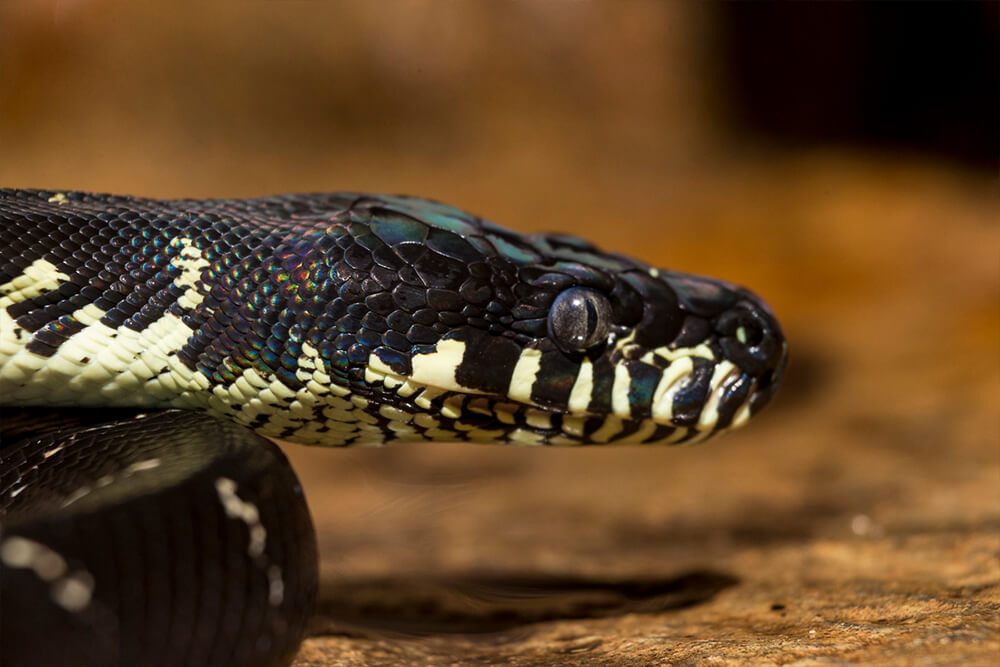
Like most snakes, pythons don’t chase after their prey. Instead, they are ambush hunters. They use both sight and smell to locate prey. Pythons also have an additional advantage: most have special temperature-sensitive "pits,” or holes, along their jaws that can sense the heat of a nearby animal. This helps them find warm-blooded prey even in the dark or among dense foliage.
The python is a constrictor. It grabs its prey with its teeth, then quickly wraps coils of its body around the prey and squeezes. The python doesn’t actually crush the prey and break its bones, though. Instead, it squeezes tightly so that its prey can’t breathe; each time its prey exhales, the constrictor tightens its coils to take up space, causing suffocation.
The snake then begins the leisurely process of unfolding its jaw and swallowing the prey whole, usually head first. The skull’s joints are able to flex and fold along with its extremely pliable skin to maximize the mouth space, allowing very large food items to pass through its esophagus. This is accomplished with rhythmic muscular contractions that pull the prey down the snake’s throat and into its stomach. How does the snake breathe while its mouth is full? It has a special tube in the bottom of its mouth that stays open to one side to take in air.
Depending on the size of the snake, pythons may eat rodents, birds, lizards, and mammals like monkeys, wallabies, pigs, or antelope. Once the meal is consumed, pythons look for a warm place to rest while their food is digested.
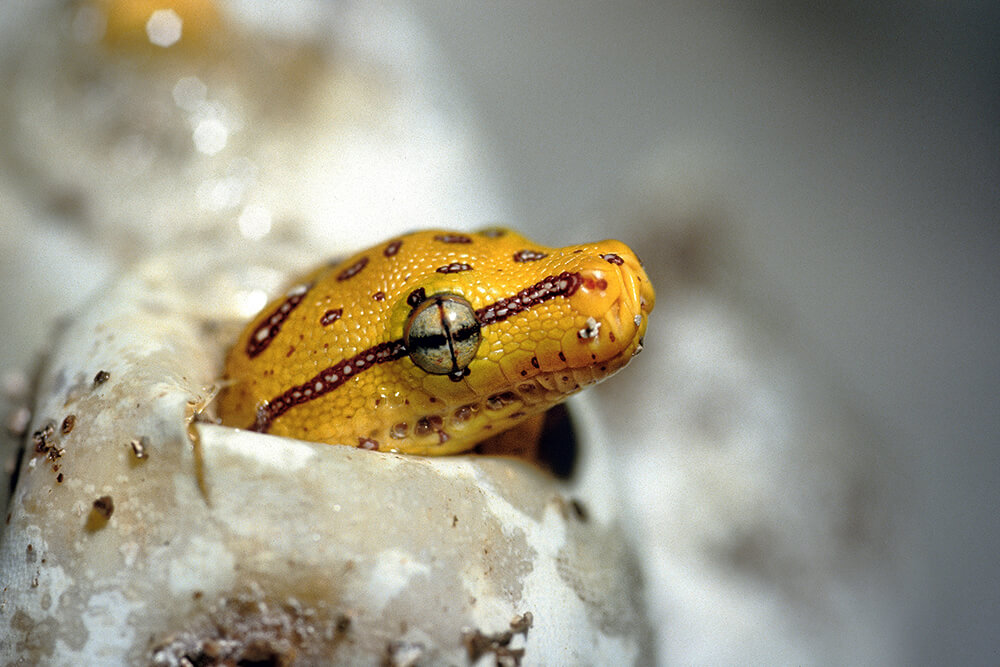
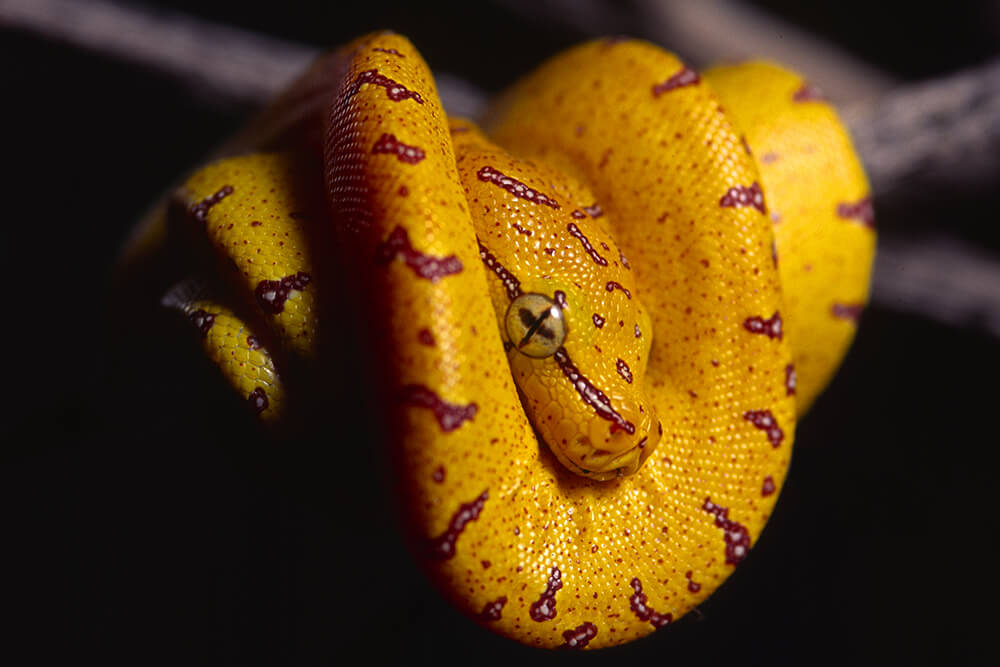
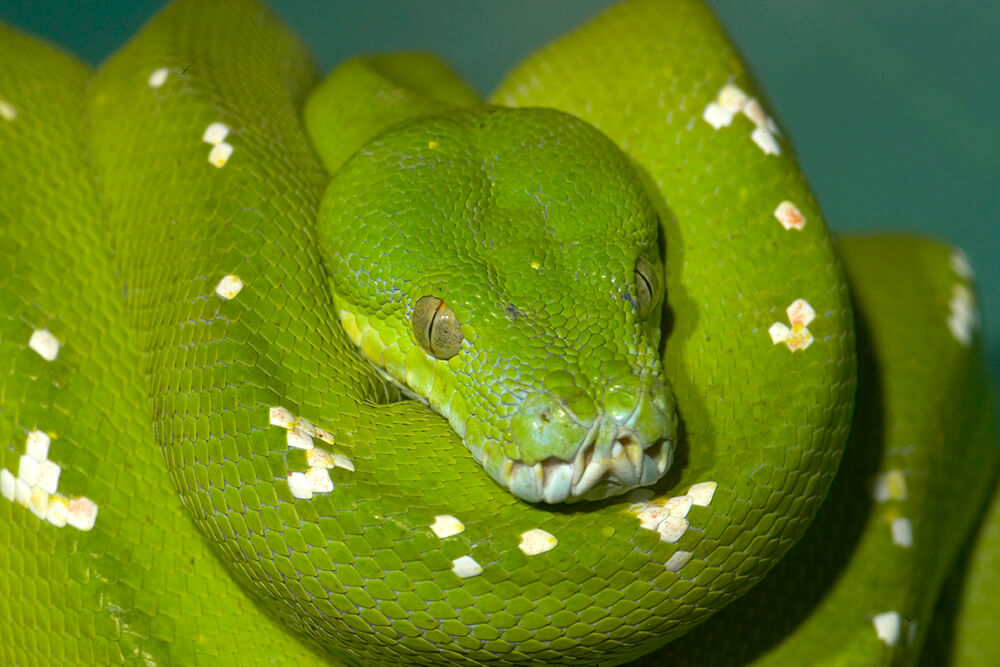
Arboreal pythons have unusually longer teeth than their ground-dwelling kin. This may help them penetrate through the feathers of birds. Their tail is also extremely prehensile, allowing these snakes to launch three quarters or more of their body at prey during a strike.
FAMILY LIFE
Unlike their close relatives the boas, pythons lay eggs. Some lay them in a shallow nest or even cover them with leaves and soil. But what’s really remarkable is that most python mothers stay coiled around their eggs to protect them while the eggs develop; if the temperature gets too cold, the mothers of some species warm their eggs up by "shivering.” This involves rhythmic contractions of the muscles and is described as looking like the snake has the hiccups. This is known as thermogenesis.
Even though snakes are ectothermic, the mother python can, amazingly, raise the temperature of her eggs a few degrees by doing this. It takes a lot of energy, though, so she may not reproduce again for two to three years as she gains back the weight she lost. After the eggs hatch, she leaves, and the babies are on their own.
CONSERVATION
Many people in Asia, Australia, and Africa live closer to pythons than they think, as the snakes may use backyards, basements, and roofs as their habitat. Pythons may also live on or near farms or gardens, where rodents are abundant.
In Australia, pythons are protected, although many are illegally taken and illegally trafficked to support a growing trade in pet pythons. Like other species, pet pythons should only be obtained from reputable sources and rescue organizations and never taken from their native ranges. And pythons everywhere also suffer from habitat loss.
The San Diego Zoo and Safari Park are safe havens for illegally trafficked wildlife such as pythons. By supporting San Diego Zoo Wildlife Alliance, you are our ally in saving and protecting wildlife worldwide.