
Dung Beetle

- CLASS: Insecta (Insects)
- ORDER: Coleoptera
- FAMILY: Scarabaeidae
- SPECIES: About 8,000
ABOUT
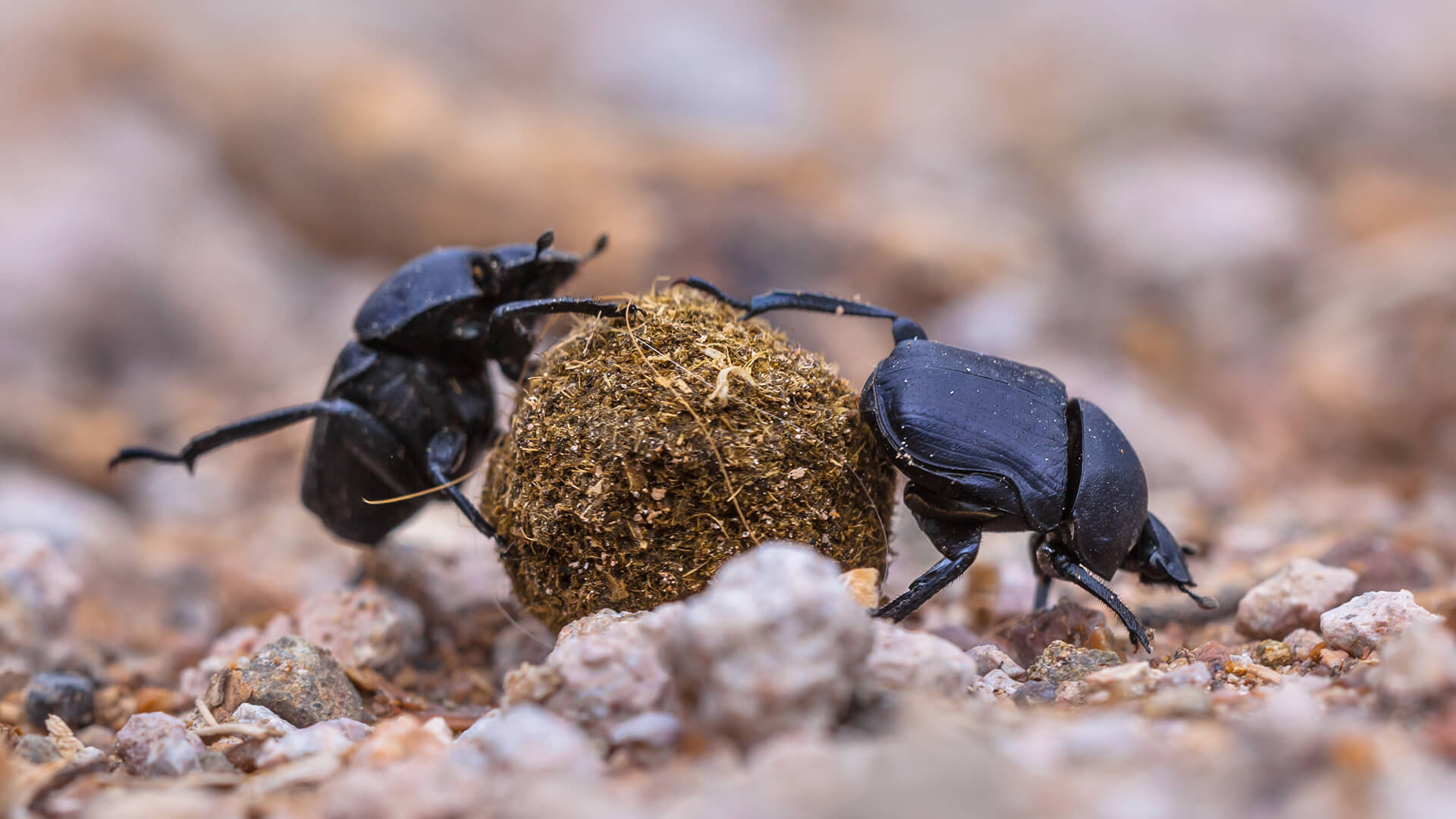
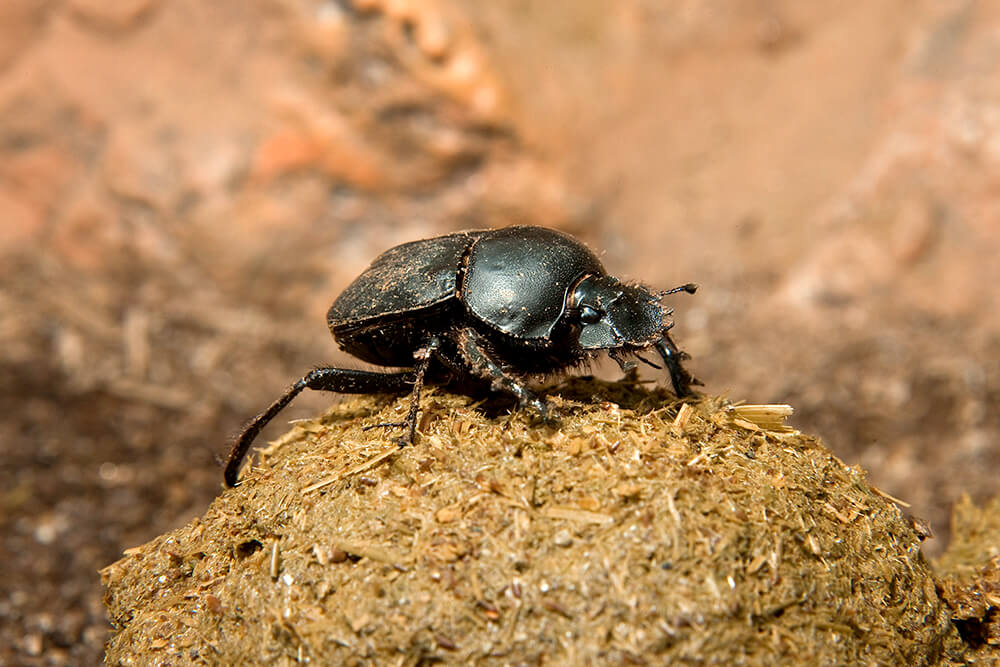
Dung beetles do just what their name suggests: they use the manure, or dung, of other animals in some unique ways! These interesting insects fly around in search of manure deposits, or pats, from herbivores like cows and elephants. Dung beetles come in a variety of colors, from dull and glossy black to metallic green and red. Ancient Egyptians thought very highly of the dung beetle, also known as the scarab (from their taxonomic family name, Scarabaeidae). They believed the dung beetle kept the Earth revolving like a giant ball of dung, linking the insect to Khepri, the Egyptian god of the rising sun.
Dung beetles have impressive “weapons,” some with a large, hornlike structure on the head or thorax that males use for fighting. They have spurs on their back legs that help them roll the dung balls, and their strong front legs are good for fighting as well as digging. Most dung beetles are strong fliers, with long flight wings folded under hardened outer wings (elytra), and can travel several miles in search of the perfect dung pat. With specialized antennae, they can catch a whiff of dung from the air.
HABITAT AND DIET
Dung beetles are found on all continents except Antarctica and live in farmland, forest, grassland, prairie, and desert habitats.
Most dung beetles use the manure of herbivores, which do not digest their food very well. Their dung contains half-digested grass and a smelly liquid. It is this liquid that the adult beetles feed on. Some of them have specialized mouthparts designed to suck out this nutritious soup, which is full of microorganisms that the beetles can digest. A few species feast on the dung of carnivores, while others skip the doo-doo and instead eat mushrooms, carrion, and decaying leaves and fruits.
Timing is everything for dung beetles. If the dung has been sitting long enough to dry out, the beetles can’t suck out the nutrition they need. One study in South Africa found that dung beetles laid more eggs during the rainy season when dung pats contain more moisture.
FAMILY LIFE
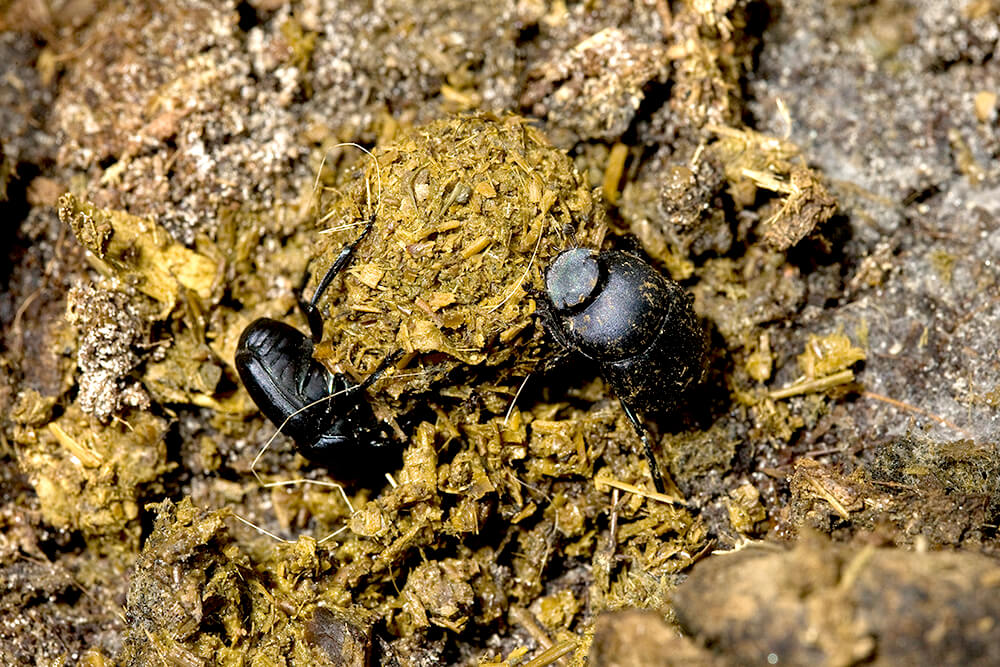
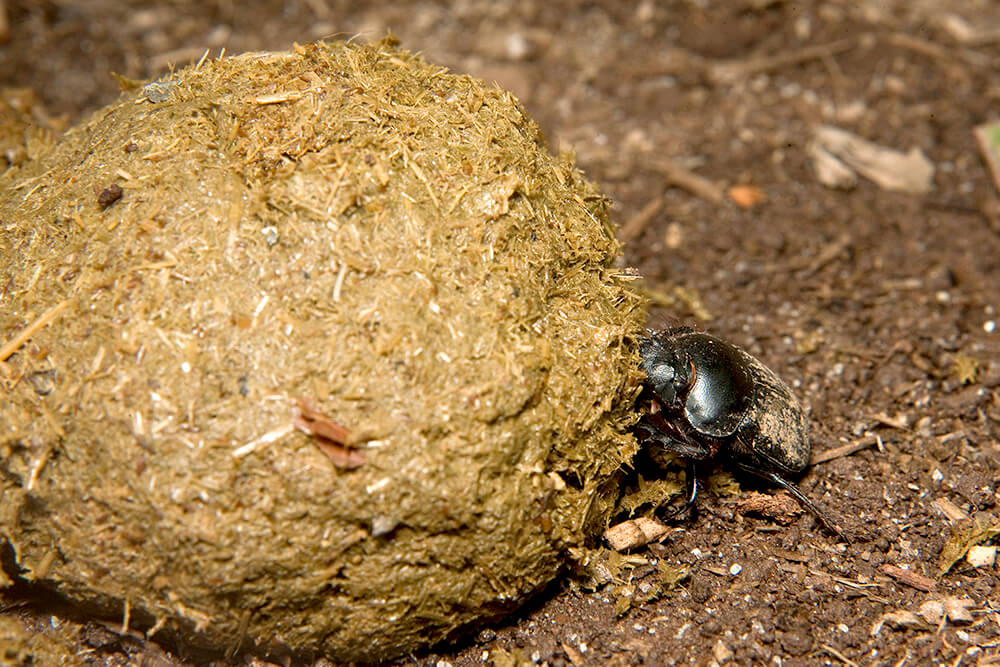
Scientists group dung beetles by the way the beetles make a living: rollers, tunnelers, and dwellers. Rollers form a bit of dung into a ball, roll it away, and bury it. The balls they make are either used by the female to lay her eggs in (called a brood ball) or as food for the adults to eat. Tunnelers land on a manure pat and simply dig down into the pat, burying a portion of the dung. Dwellers are content with staying on top of the dung pat to lay their eggs and raise the young.
After a chance encounter at a dung pat, male and female rollers establish a pair bond. The male offers the female a giant-sized brood ball. If she accepts it, they roll it away together or the female rides on top of the ball. They must watch out, though, as other beetles may try to steal their ball!
The new pair finds a soft place to bury the ball before mating. The male then leaves to find more partners. The female stays to make another brood ball or two and lays a single egg in each. She then coats and seals the ball with a mixture of dung, saliva, and her own feces and stows it underground. Some dung beetle mothers stay with the ball for two months, cleaning the larvae (called grubs) that hatch and removing their feces.
Tunnelers dive into a cow pile and tunnel straight down to set up the family home. Storing the dung underground keeps it fresh and protects the developing grubs from predators and parasites. The female sorts through dung and arranges it throughout the tunnel. The male’s job is to bring home the doo-doo. One or both of the parents stay with the larvae until they mature, which can take up to four months. This level of parental care is unusual in the insect world.
Dwellers are on top of the world—or at least the dung heap. The female lays her eggs on top of manure piles, and the entire development from egg to adult takes place inside the dung pat. Dwellers are smaller than tunnelers and rollers, and they seem to like cow patties best for raising a family. The adults can be found in fresh, moist droppings, while the larvae are slowly growing in dung that is drying out.
CONSERVATION
So, what’s so great about dung beetles? They are mighty recyclers! By burying animal dung, the beetles loosen and nourish the soil and help control fly populations. The average domestic cow drops 10 to 12 dung pats per day, and each pat can produce up to 3,000 flies within two weeks. In parts of Texas, dung beetles bury about 80 percent of cattle dung. If they didn’t, the manure would harden, plants would die, and the pastureland would be a barren, smelly landscape filled with flies!
In Australia, the native forest-dwelling dung beetles could not keep up with the tons of manure deposited by cattle in the pastures, causing a tremendous increase in the fly population. African dung beetles, which do well in open fields, were brought to Australia to help with the growing piles of poo, and today the pastureland is doing well and the fly populations are under control.
We may question their lifestyle, but it’s certain that our world would be a much smellier place without the mighty dung beetle!
By supporting San Diego Zoo Wildlife Alliance, you are our ally in saving and protecting wildlife worldwide.